Physical Address
304 North Cardinal St.
Dorchester Center, MA 02124
 Skip to content
Physical Address
304 North Cardinal St.
Dorchester Center, MA 02124

Your favorite sports world
Your favorite sports world
LONDON – Sport 4 ever: Why Fans Become So Emotionally Attached to Teams

For millions of supporters, sport is far more than a result on a scoreboard. A victory can transform an ordinary weekend into a celebration, while a painful defeat can affect a person’s mood long after the final whistle. Fans wear team colours, follow transfer news, argue about decisions, travel thousands of miles for matches and sometimes organize much of their social lives around a club. But why do fans become so emotionally attached to teams?
The answer goes well beyond winning and losing. Recent sports coverage and psychological research point to a powerful combination of identity, belonging, family tradition, shared memories, ritual and emotional experience.
One of the strongest explanations comes from social identity. People naturally divide the social world into groups, and supporting a sports team gives individuals a ready-made community with its own symbols, history and traditions.
A supporter may say “we won” even though they never entered the field. That simple word captures something important: the team becomes part of the fan’s sense of self.

Research discussed by the American Psychological Association has found that identifying with a sports team can provide social and psychological benefits. Being part of a fan community can create connections with other people and give supporters a feeling that they belong to something larger than themselves.
The effect is particularly powerful because sport creates a visible distinction between “us” and “them”. The opposing team is not merely another group of athletes. It becomes the group standing between the supporter and a desired outcome.
That division can produce rivalry, but it can also strengthen friendship. Two strangers wearing the same shirt can begin talking before a match because they already share an important part of their identity.
This helps explain why supporters can remain loyal even when their teams struggle for years. The relationship is not always based on expectations of success. It can be based on belonging.
For some fans, supporting a club is connected to where they grew up, their family, their city or their community.
A child may inherit a club from a parent. A teenager may choose a team because friends support it. Someone who moves abroad may become even more attached to the club associated with home.
Over time, the team becomes connected to personal memories.
A particular shirt can remind someone of a championship. A stadium can bring back memories of a parent or grandparent. A famous goal may be remembered not only for what happened on the pitch, but also for where the fan was standing and who was celebrating beside them.
This is one reason sports loyalty can survive dramatic changes in players, coaches and club leadership. The emotional connection belongs partly to the history surrounding the team.
Sport has a unique ability to create collective emotional experiences.
A football match, basketball game or tennis tournament can bring thousands of people together while they experience tension, hope, disappointment and relief at almost exactly the same moment.
That shared emotional rhythm is difficult to reproduce elsewhere.
Recent reporting has highlighted how live sport can encourage social connection and give people a structured experience to anticipate. The emotional highs and lows can also provide a temporary escape from everyday pressures, although excessive or obsessive fandom can become unhealthy.
The stadium intensifies the experience. Supporters sing together, react together and celebrate together. Even people who have never met can feel temporarily connected.
The same process now takes place online.
Fans follow live updates, exchange opinions, watch videos and discuss decisions through social media. A supporter who lives hundreds or thousands of kilometres from a club can still participate in its daily conversation.
Research into online sports communities has shown that team performance influences fan activity and discussion, while unexpected results can generate particularly strong reactions.
The internet has therefore not removed the emotional bond between fans and teams. In many cases, it has made that bond more constant.
Supporters no longer have to wait until match day to feel connected. News about injuries, transfers, training sessions, interviews and club announcements can keep the emotional relationship active throughout the week.
Another important factor is ritual.
Fans often develop routines around matches. They may wear a particular shirt, sit in a particular place, watch games with the same friends or family members, sing the same songs or perform personal superstitions.
Recent reporting on football fandom in Latin America has shown how deeply these rituals can become embedded in supporters’ lives. Some fans treat club traditions almost as sacred practices, while objects such as scarves, shirts and club symbols become important emotional possessions.
Rituals give sport a sense of continuity.
The same match-day routine can be repeated for decades, creating a bridge between different periods of a person’s life. Even when a team changes its squad completely, the supporter can still experience the familiar emotional pattern of preparing for the game, watching it and discussing it afterwards.
That familiarity strengthens attachment.
It might seem logical that supporters would simply choose successful teams. Winning does matter, and research has found relationships between team quality, emotional satisfaction and fan attachment.
But success alone cannot explain long-term loyalty.
If winning were the only factor, supporters would regularly abandon unsuccessful teams for stronger ones. That does happen to some extent, particularly among so-called bandwagon fans, but many supporters remain loyal through relegations, losing seasons and years without major trophies.
Their commitment is often built on something deeper.
A 2025 study examining football supporters found that emotional attachment was positively associated with commitment, which in turn supported loyalty. The findings underline the difference between simply enjoying a successful team and developing a lasting relationship with it.
In other words, disappointment can sometimes strengthen the bond.
When supporters experience difficult periods together, the struggle itself becomes part of the club’s story. A dramatic comeback after years of failure can carry greater emotional weight than a routine victory by a dominant team.
The history of suffering can become part of the identity.
Sport is unusual because defeat is built into the experience.
Even the best teams lose. Supporters therefore learn to manage frustration, disappointment and uncertainty. The emotional journey between hope and disappointment can make victories feel more meaningful.
Recent research examining online football communities has found that fan emotions change with results and expectations. Studies of online supporters have also identified distinct patterns in joy and anger around matches.
That emotional volatility is part of the attraction.
A predictable outcome would rarely create the same level of excitement. Fans keep watching because they do not know what will happen.
This uncertainty can make a single match feel enormously important.
It also explains why supporters may remember a heartbreaking defeat for decades. The emotional intensity of the event fixes it firmly in memory.
Although the club is often the central focus, individual athletes can also become important parts of a fan’s emotional world.
A player may represent a generation. Supporters may remember watching a particular star during childhood or associate that athlete with a team’s most successful period.
When the player leaves, the reaction can feel surprisingly personal.
The same applies to coaches and club figures. A manager who delivers a historic trophy can become permanently associated with the club’s identity. A controversial departure may produce feelings of betrayal.
Modern media has intensified these relationships.
Players now communicate directly with supporters through social platforms, interviews and behind-the-scenes content. Fans can see training photographs, personal messages and everyday moments that were once unavailable.
This can create the impression of greater closeness between supporters and athletes.
At the same time, research into sports fandom shows that social media interaction can strengthen emotional bonds with teams and influence fan behaviour. A study of sports fans found that social-media use can mediate the relationship between curiosity about teams and stronger engagement, including purchasing behaviour.
The supporter is therefore no longer only watching a team play. They are following an ongoing narrative.
One of the strongest forces behind sports attachment is simple: people often become fans before they are old enough to understand the sport.
Parents introduce children to clubs. Grandparents pass down stories. Families attend matches together or watch them at home.
That creates emotional associations long before a young supporter can properly evaluate a team’s tactics or results.
A club can become part of a family language.
Grandparents tell stories about famous matches. Parents remember historic players. Children grow up hearing the same songs and learning the same rivalries.
The team consequently becomes a symbol of family continuity.
This pattern is especially visible in football cultures where clubs are deeply connected with neighbourhoods and cities. Recent reporting has described football fandom in Latin America as closely linked with cultural identity, community and intergenerational traditions.
The same principle can apply across sports and countries.
Supporters may live far from their team’s stadium but still regard the club as a connection to home.
The emotional connection between fans and teams is not necessarily negative or irrational.
Research and professional psychology discussions suggest that sports fandom can support social wellbeing when it encourages connection rather than isolation. A team can give people regular opportunities to meet friends, communicate with strangers and participate in a shared activity.
The sports calendar also creates structure.
There is something to anticipate before the weekend. There is a conversation to have after the match. There are fixtures to discuss, players to follow and memories to create.
For someone experiencing loneliness, that social connection can be meaningful.
The danger appears when the emotional relationship becomes excessive.
Obsessive behaviour, hostility towards rival supporters, gambling problems or an inability to separate personal wellbeing from sporting results can turn healthy enthusiasm into something damaging.
The emotional bond itself is not the problem. The question is how much control the fan retains over it.
Sports clubs constantly change.
Players retire. Coaches are dismissed. Owners change. Stadiums are renovated. Sponsors appear. New generations of supporters arrive.
Yet the emotional identity of a club can survive these changes.
That durability comes from the fact that supporters are not simply attached to a collection of athletes. They are attached to a story.
The badge represents previous generations, present hopes and future expectations.
This also explains why controversial decisions can provoke such strong reactions. Research involving European football supporters has found that social identity can help sustain commitment and loyalty even when fans disagree with important decisions made by their clubs.
A supporter can be furious with a club’s leadership while remaining deeply loyal to the club itself.
That distinction is crucial.
Fans may reject a manager, criticize an owner or demand changes to the squad without abandoning the underlying identity that connects them to the team.
Ultimately, the strongest sports fandom is not built simply on trophies.
It is built through years of emotional investment.
Fans remember where they were when their team won. They remember who they watched the match with. They remember the heartbreak of a late defeat and the relief of a last-minute goal.
Those experiences accumulate.
A team becomes a container for memories, relationships, traditions and hopes. That is why a result that lasts only 90 minutes can produce emotions that last for years.
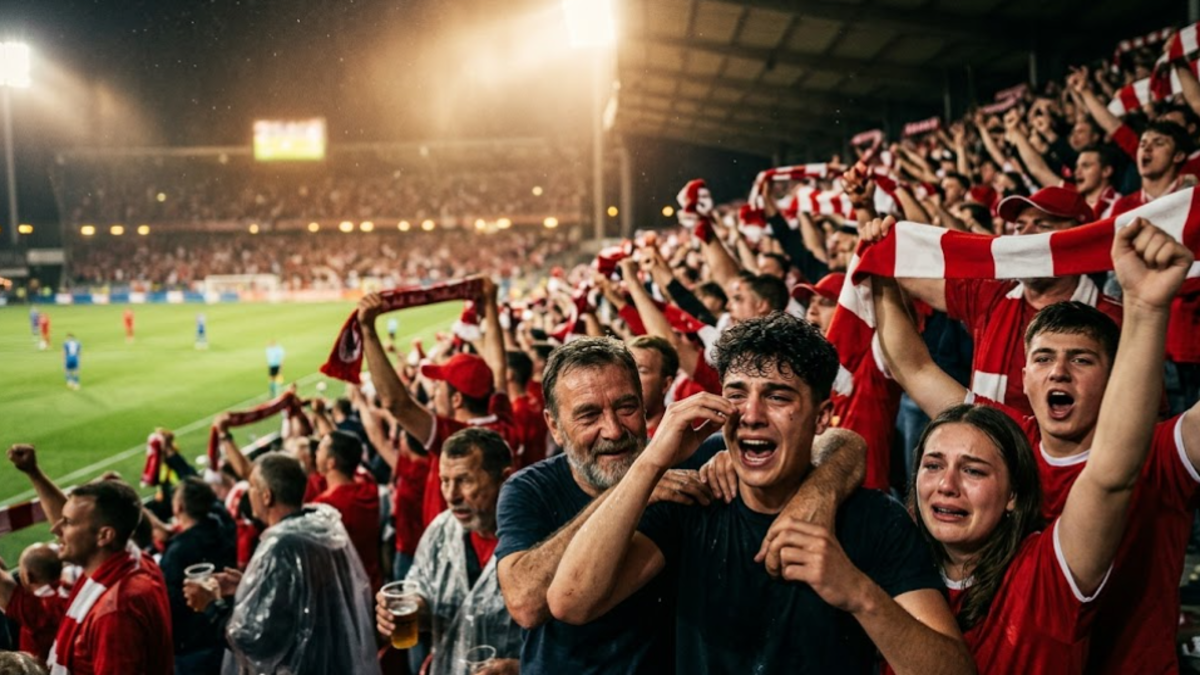
It also explains why supporters can cry after a victory, feel genuine grief after a defeat and travel enormous distances to watch a match that will be over in a few hours.
The game is temporary. The meaning attached to it can be permanent.
As modern sports coverage increasingly examines the psychological side of fandom, one point becomes clear: supporters do not merely consume sport. They participate emotionally in a shared story.
That story gives people identity, community and something to care about.
And perhaps that is the most important reason fans remain loyal when the trophies disappear, the players change and the results turn against them: they are not only supporting a team. They are supporting a part of their own story.
Fans can identify with a team’s history, community, colours and traditions. The team can become part of their personal and social identity.
Success can strengthen emotional satisfaction and attachment, but long-term loyalty often survives periods of poor performance because it is also based on identity, memories and belonging.
Shared matches, celebrations, disappointments and traditions create a sense of community. Supporters can feel that they belong to the same social group.
Yes. Moderate fandom can encourage social connection, provide routine and create shared experiences. However, excessive or obsessive involvement can have negative consequences.
….Read More
Contact us at: info@sport4ever.org