Physical Address
304 North Cardinal St.
Dorchester Center, MA 02124
 Skip to content
Physical Address
304 North Cardinal St.
Dorchester Center, MA 02124

Your favorite sports world
Your favorite sports world
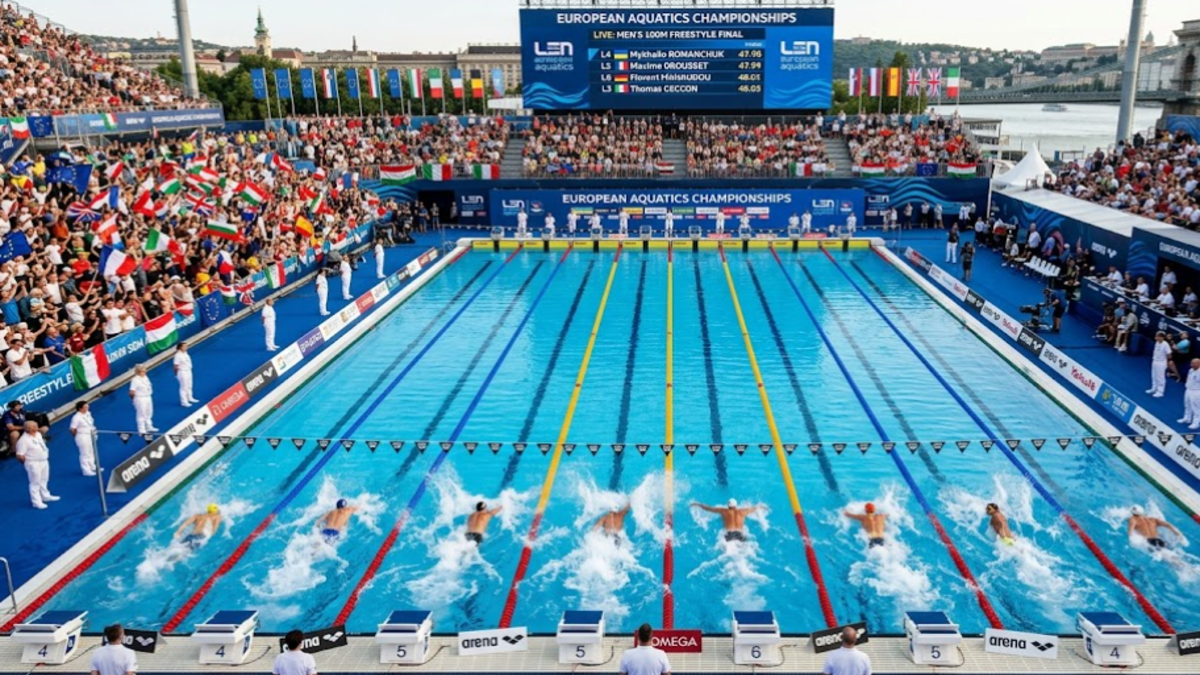
PARIS – Sport 4 ever: European Aquatics Championships deliver a festival of continental excellence in the pool

The European Aquatics Championships have once again brought together the continent’s leading swimmers, divers, artistic swimmers and open-water specialists for one of the biggest events on the international aquatic calendar. Hosted in Paris, the competition has produced dramatic finals, unexpected medal winners and performances that underline the depth of European talent.
From the opening artistic swimming routines to the diving battles and open-water challenges, athletes have competed for European titles in a championship that combines technical precision, endurance and creativity. The event has attracted attention from fans across Europe as established champions and emerging names fight for medals on one of the sport’s most important stages.
With records, emotional victories and intense rivalries shaping the competition, what are the biggest stories that have emerged from this European aquatic showcase?
The European Aquatics Championships have become a key meeting point for the sport’s biggest disciplines, bringing together athletes from across Europe in swimming, diving, artistic swimming, open water and high diving. The Paris edition has continued that tradition by creating a platform where Olympic champions, rising stars and experienced competitors compete side by side.

The championship has attracted particular interest because many athletes arrived after major international competitions with ambitions to confirm their status among Europe’s best. Others used the event as an opportunity to announce themselves on the global stage.
In artistic swimming, the competition produced several memorable performances. Great Britain celebrated important successes, including victories in synchronised events, while Ranjuo Tomblin achieved a remarkable run of gold medals during the artistic swimming programme.
Spain also continued its strong tradition in the discipline. The Spanish team secured a silver medal in the technical team event, reinforcing its position among Europe’s leading artistic swimming nations.
The artistic swimming competitions demonstrated how the discipline has evolved. Athletes now combine demanding technical elements with increasingly complex choreography, requiring strength, timing and artistic expression at the highest level.
The diving events added another layer of excitement to the championship, with athletes delivering high-quality routines under enormous pressure. Every dive required a balance between difficulty, execution and consistency, with small mistakes often deciding medal positions.
Italy’s Chiara Pellacani became one of the standout names in the diving competition after collecting multiple European titles. Her performances highlighted the strength of Italian diving and continued a successful period for the athlete on the continental stage.
Great Britain also enjoyed a strong championship in diving. The British team collected major victories, including success in women’s synchronised 10m diving, showing the country’s continued investment and development in aquatic sports.
The diving competition also gave younger athletes the chance to compete against established stars. Several performances showed that European diving continues to produce new generations capable of challenging the traditional powers.
Fans followed every round closely as athletes attempted complicated combinations from the springboard and platform. The margin between victory and defeat remained extremely small, making every final unpredictable.
The official competition information, schedules and results are available through the governing body’s channels at European Aquatics official website.
The open-water races introduced a different challenge compared with pool events. Athletes faced longer distances, changing conditions and tactical battles where positioning often mattered as much as speed.
The 10-kilometre races produced demanding contests, with swimmers needing to manage energy levels while staying competitive throughout the course. Germany’s Florian Wellbrock claimed attention after a strong performance in the men’s event, continuing his reputation as one of Europe’s leading distance swimmers.
Women’s open-water racing also delivered intense competition. Italy’s Ginevra Taddeucci won the women’s 10-kilometre race, while Spain’s Ángela Martínez finished fifth after remaining among the leading swimmers for much of the contest.
Open-water swimming often creates unpredictable races because athletes must react to rivals, currents and tactical changes. Unlike pool competitions, where lanes provide structure, open-water events require constant decision-making.
The performances in Paris showed the growing competitiveness of European open-water swimming. Nations with strong traditions continue to battle for medals, while new contenders continue to close the gap.
The swimming programme remains one of the most anticipated parts of the championships. Europe has produced many of the world’s greatest swimmers, and the continental event gives athletes another opportunity to prove their quality.
Several major names entered the competition with strong expectations. French star Léon Marchand attracted attention from home supporters, while other Olympic-level swimmers targeted European medals after successful seasons.
The swimming events combine speed, endurance and technical ability across dozens of disciplines. Sprint specialists focus on explosive starts and perfect finishes, while distance swimmers rely on pacing and consistency.
The championship also provides a valuable opportunity for younger swimmers. Many athletes use European competition to gain experience against elite opponents before future global events.
National teams closely monitor performances because medal results often reveal the strength of their development programmes. Success at European level can represent years of work from athletes, coaches and sporting organisations.
The competition has again demonstrated that European swimming remains one of the strongest forces in international aquatics.
Beyond medals and rankings, the championships have delivered stories of determination, recovery and sporting ambition. Every athlete arriving in Paris carried a personal journey shaped by years of training and sacrifice.
The event has also highlighted the importance of technology and innovation in modern aquatic sports. Organisers introduced new methods of capturing competition moments, including underwater camera technology designed to offer fans a closer view of performances.
These developments have helped bring aquatic sports closer to audiences and provide a deeper understanding of the skills required at elite level.
The championships continue to attract interest because they combine tradition with progress. Established champions defend their reputations, while new athletes challenge expectations and create fresh rivalries.
European aquatic sports remain highly competitive, and the latest championship has reinforced the continent’s position as a global leader in swimming and related disciplines.
The importance of the European Aquatics Championships extends beyond a single competition. The event inspires young athletes and promotes participation in swimming and aquatic sports across Europe.
National federations use these championships as a benchmark to measure progress and identify future stars. The performances seen in Paris provide motivation for thousands of developing swimmers, divers and artistic swimmers.
The championship also reminds fans of the variety within aquatic sports. While swimming often receives the most attention, diving, artistic swimming and open-water events continue to attract passionate audiences.
As the competition progresses and champions celebrate their achievements, the message remains clear: European aquatic sports continue to grow stronger, more competitive and more exciting.
The latest edition has delivered unforgettable performances, dramatic finishes and a new collection of sporting heroes who represent the future of the discipline.
What are the European Aquatics Championships?
They are a major continental competition featuring swimming, diving, artistic swimming, open water and high diving.
Which sports are included in the championships?
The event includes several aquatic disciplines, from pool swimming to diving and open-water racing.
Why are the championships important?
They provide European athletes with a major platform to compete for continental titles and prepare for global competitions.
Where can fans follow official results?
Fans can follow schedules and results through official European Aquatics channels.
….Read More
Contact us at: info@sport4ever.org