Physical Address
304 North Cardinal St.
Dorchester Center, MA 02124
 Skip to content
Physical Address
304 North Cardinal St.
Dorchester Center, MA 02124

Your favorite sports world
Your favorite sports world
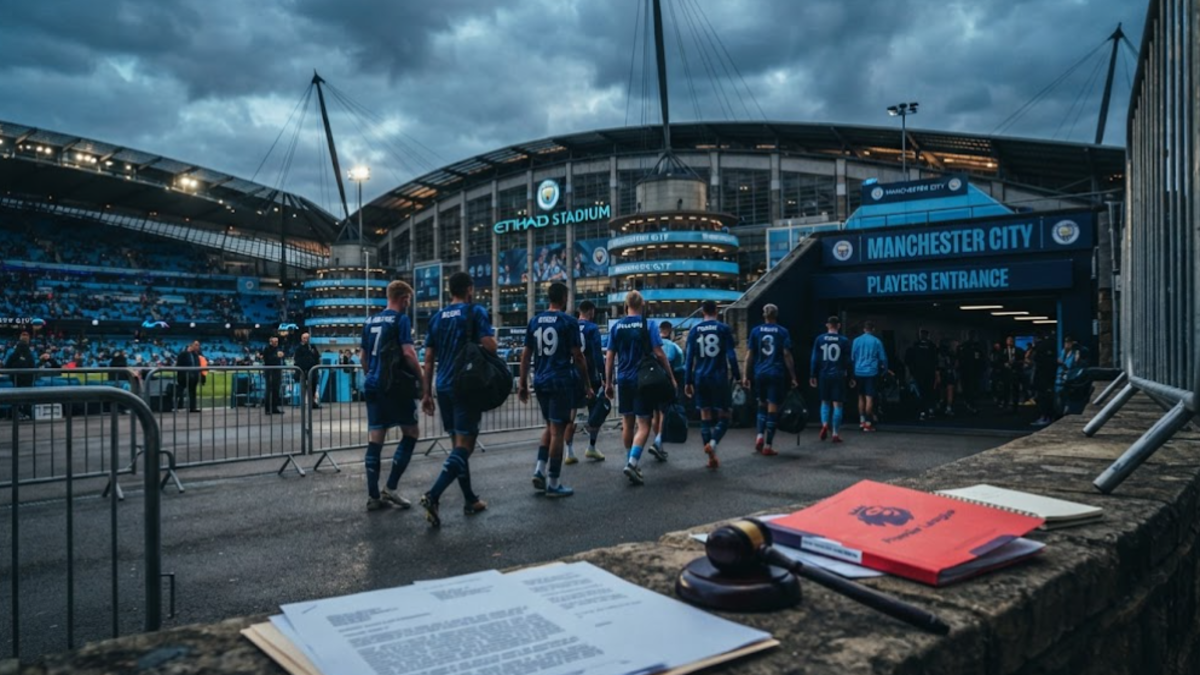
LONDON – Sport 4 Ever: Man City Premier League charges have entered a decisive stage, with reports indicating that an independent tribunal has reached decisions on the extensive case involving Manchester City and more than 100 alleged breaches of Premier League financial rules. If breaches have been established, what happens next and how could the appeals process shape the outcome?

Manchester City were charged by the Premier League in February 2023 following a long-running investigation into alleged financial rule violations. The case centres on 115 charges and has become one of the most significant disciplinary proceedings in English football.
Reports that the independent tribunal has reached decisions now move the dispute into a new phase. The outcome itself remains subject to the formal process, while both the Premier League and Manchester City have rights to challenge a judgment under the league’s rules.
The next step would be an appeal if either side decides to contest the tribunal’s decision. Any such appeal would be heard by a separate three-person Appeal Board rather than the original commission.
The process is therefore not necessarily finished with the tribunal’s judgment. However, the appeal stage would represent the final part of the Premier League’s internal disciplinary procedure.

If any of the alleged breaches are proven, Manchester City would be highly likely to consider an appeal. The Premier League rules allow both parties to challenge a decision within 14 days of the judgment.
An appeal would not return to the same tribunal that considered the original case. Instead, a new three-person commission would hear the challenge.
The Premier League’s rules provide for an Appeal Board appointed by the chair of the independent judicial panel. The board must contain three members, with one member required to have held judicial office and serve as its chair.
The appeal proceedings would take place privately and remain confidential.
The Appeal Board has broad powers when considering a challenge. It can allow an appeal, dismiss it or make another order it considers appropriate, including changing the order made by the original commission.
That gives the appeal panel considerable scope over the final outcome within the Premier League’s disciplinary system.
A party cannot simply appeal because it disagrees with the judgment. The grounds for challenging a decision can include issues such as fraud, misconduct or gross unfairness by the arbitrator.
The distinction is important because an appeal is not an entirely new investigation into the allegations. It is a legal challenge to the decision reached during the original proceedings.
The case therefore enters a different phase once the tribunal has delivered its judgment.
The potential consequences for Manchester City depend heavily on which allegations, if any, are ultimately established.
Premier League rules provide a range of possible sanctions for financial rule breaches. These can include fines, points deductions and other sporting penalties.
There is no fixed punishment for every financial breach.
The absence of a predetermined sanctions system means the independent commission has significant discretion when deciding what penalty is appropriate. Clubs previously chose not to establish fixed sanctions because of concerns that a known punishment could encourage teams to breach financial rules and simply accept the predetermined consequence.
That leaves the scale and nature of any sanction open to consideration if the tribunal finds against Manchester City.
A fine would represent one possible outcome. Sporting sanctions could have a much more direct impact on the club’s position in domestic competition.
A points deduction, for example, could affect Manchester City’s league position and potentially have consequences for qualification for European competitions, depending on its size and timing.
The Premier League has also considered the possibility of creating a Sanctions Grid. In February 2025, chief executive Richard Masters said the league was examining a system that could establish agreed sanctions for different categories of rule breaches.
However, the information supplied for this report does not indicate that such a system had replaced the existing discretionary approach in the Manchester City case.
The examples from other clubs demonstrate how different financial cases have produced different sporting penalties.
Manchester City’s potential punishment cannot simply be calculated by comparing its case with previous points deductions.
The circumstances of individual cases differ, as do the rules involved, the number and nature of breaches and the findings reached by the relevant disciplinary bodies.
Everton provide one recent example. The club received a six-point deduction during the 2023/24 season following an appeal and later received another two-point deduction for a separate breach of the Premier League’s profit and sustainability rules.
Nottingham Forest were also deducted four points during the same season after a PSR breach.
Earlier cases show that substantially larger deductions have also been imposed.
Luton Town received a 30-point deduction during the 2008/09 season. Ten points related to illegal payments to agents, while another 20 points followed the club’s exit from administration without a Company Voluntary Arrangement.
Derby County received a combined 21-point deduction during the 2021/22 season. Twelve points were imposed after the club entered administration, while another nine points related to financial irregularities.
These cases underline the broad range of sanctions available to the Premier League.
They also show why previous deductions do not automatically establish what Manchester City could face. The tribunal and any subsequent Appeal Board would have to consider the specific findings in this case.
For the latest official Premier League rules and competition information, readers can consult the Premier League official website.
The existence of an appeal does not automatically settle the question of when a sanction would take effect.
According to the information available, sanctions would be considered at a separate hearing.
That means the disciplinary process involves another important stage after the findings on the alleged breaches. The tribunal’s conclusions and the eventual sanction are separate elements of the overall process.
The timing of any punishment could therefore become a significant issue if Manchester City challenges the judgment.
An appeal could also affect the timetable for implementing sporting consequences. The precise effect would depend on the decisions made during the relevant proceedings and the orders issued by the disciplinary bodies.
The Premier League’s rules give the Appeal Board wide discretion, meaning the final position could change following an appeal.
This is particularly significant in a case involving potentially serious sporting sanctions. A points deduction applied during a season could have an immediate effect on league standings, while a penalty imposed at another point could create different competitive consequences.
The information supplied does not establish what sanctions, if any, will ultimately be imposed on Manchester City.
For that reason, it would be premature to treat reports about the tribunal’s findings as equivalent to a final sporting punishment.
The distinction between a finding, a sanction and an appeal is central to understanding what happens next.
If Manchester City challenge the tribunal’s decision, the case would move before a new three-person Appeal Board.
The board would consider the grounds of the appeal and could either uphold the original decision, allow the challenge or alter the order made by the commission.
The appeal would therefore provide another opportunity to contest the outcome within the Premier League’s disciplinary framework.
However, the process has a defined endpoint.
Manchester City cannot take the Premier League disciplinary appeal to the Court of Arbitration for Sport, commonly known as CAS.
The Appeal Board represents the end of this particular internal process.
That does not necessarily mean the wider legal dispute would disappear.
The scale of the allegations and the potential sporting consequences mean other legal disputes could emerge even after the Premier League appeal process concludes.
One of the most significant issues beyond the disciplinary proceedings concerns the possibility of action by other clubs.
If Manchester City were found to have breached financial rules in a way that affected sporting outcomes, rival clubs could potentially argue that they suffered losses as a result.
The information supplied indicates that clubs could consider legal action over matters such as missed trophies or Champions League qualification.
Such claims would be separate from the Premier League’s disciplinary process.
A ruling on the financial allegations would not automatically determine the outcome of any future claims brought by other clubs. Those cases would involve their own legal arguments, evidence and procedures.
The possibility nonetheless adds another layer to an already complex dispute.
Manchester City’s case has attracted attention because the alleged breaches cover a substantial number of charges and could have consequences extending beyond a simple financial penalty.
The club’s response throughout any appeal would therefore be closely watched, particularly if the tribunal’s findings result in significant sporting sanctions.
The appeal stage matters because the tribunal’s findings are not necessarily the final word on the disciplinary outcome.
Both the Premier League and Manchester City have the right to challenge the decision within the specified 14-day period.
If an appeal is lodged, a different three-person body will examine the case under the relevant appeal rules.
The Appeal Board’s powers are broad. It can dismiss the appeal, allow it or vary the commission’s order.
That means the final outcome could differ from the original decision.
At the same time, the absence of a route to CAS means the Premier League’s Appeal Board represents the final stage of this disciplinary process.
The case could nevertheless continue to generate legal disputes outside the Premier League framework.
For Manchester City, the immediate priority would be understanding the tribunal’s findings, assessing any sanctions and deciding whether there are grounds for an appeal.
For the Premier League, the case represents a major test of its financial regulations and disciplinary system.
The outcome could also influence future discussions about how financial breaches should be punished and whether the competition should introduce a more structured sanctions system.
The immediate sequence is relatively clear.
First, the tribunal’s judgment must be formally considered by the parties. If either Manchester City or the Premier League wants to challenge the decision, an appeal must be lodged within 14 days.
Second, an Appeal Board made up of three members would hear the challenge.
Third, the board could uphold the original position, reject the appeal or alter the commission’s order.
If sanctions are required, they would be considered through a separate hearing.
The appeal would then bring the Premier League’s internal disciplinary process to an end.
However, possible claims from other clubs could create further legal proceedings beyond that point.
The crucial issue is therefore not simply whether allegations have been established. The consequences will depend on the precise findings, the sanctions imposed and whether either side successfully challenges the decision.
Until those stages are completed, the ultimate sporting impact remains uncertain.
Manchester City’s case has already become one of the most closely watched financial disputes in English football. The next phase will determine whether the tribunal’s findings survive an appeal and what consequences, if any, follow from them.
They are allegations that Manchester City breached Premier League financial rules. The case involves 115 charges.
Yes. Either side can appeal within 14 days of the judgment under the Premier League’s appeal rules.
No. The Premier League disciplinary appeal cannot be taken to the Court of Arbitration for Sport.
Possible sanctions include a fine, a points deduction and other sporting penalties. The final sanction would depend on the findings and the relevant disciplinary proceedings.
….Read More
Contact us at: info@sport4ever.org