Physical Address
304 North Cardinal St.
Dorchester Center, MA 02124
Physical Address
304 North Cardinal St.
Dorchester Center, MA 02124

Your favorite sports world
Your favorite sports world
In human history, major conflicts often result from a long accumulation of political, economic, and social tensions. But sometimes, a seemingly simple, unexpected event can ignite the fuse of a devastating war. This is precisely what happened in Central America in 1969, when a World Cup qualifying football match between El Salvador and Honduras became the spark that ignited a brief but bloody military conflict, known as the “Football War” (Football War). Football was not the root cause of the war, but rather the last straw that broke the already fragile relations between the two countries.
Tense Background: A Struggle Over Land and Identity
To understand the “Football War,” one must look back at the decades preceding 1969. Relations between El Salvador and Honduras were far from friendly; they were fraught with several complex and escalating issues:
All these factors created fertile ground for an explosion, with the political and media atmosphere charged with mutual hostility, and governments under immense popular pressure.
1970 World Cup Qualifiers: The Unexpected Spark
Amidst this tense atmosphere, the 1970 World Cup football qualifiers became the stage where the flames ignited. Fate had pitted El Salvador and Honduras against each other in the second round of the qualifiers. The first match was held on June 8, 1969, in Tegucigalpa, the capital of Honduras. Honduras won 1-0. The match was not peaceful, witnessing acts of violence against Salvadoran fans and players.
El Salvador retaliated in the return leg held on June 15, 1969, in San Salvador, the capital of El Salvador. El Salvador won 3-0, but the atmosphere was even more chaotic and violent. Honduran fans and players were subjected to assaults and insults, and riots intensified. Football became a symbol of the broader conflict between the two nations, and the match culminated in many unfortunate incidents.
Due to the teams being tied on points (one win each), a decisive playoff match was scheduled to determine the qualifier for the next round. This crucial match was held on June 26, 1969, in Mexico City, on neutral ground. This match was the final straw. El Salvador won 3-2 after extra time. But the Salvadoran joy of victory was short-lived; this result exacerbated nationalist sentiments unprecedentedly, and the football confrontation became a symbol of accumulated anger.
War Breaks Out: Four Days of Devastation
Just a few days after the playoff match, the situation exploded. On July 14, 1969, El Salvador launched a surprise military offensive against Honduras. Salvadoran air forces used old World War II aircraft to bomb targets in Honduras, while ground troops advanced across the border. El Salvador’s stated goal was to protect its persecuted citizens in Honduras and stop their alleged “genocide.”
The war was brief but brutal. Combat lasted for only four days, which is why it was also known as the “Hundred Hours War”. It witnessed fierce clashes on the border, reciprocal shelling, and caused the displacement of large numbers of residents from border areas. Despite its short duration, human losses were heavy. Estimates indicate that nearly 1,000 people died, including soldiers and civilians from both countries.
International Intervention and the Consequences of War
The Organization of American States (OAS) intervened swiftly to arrange a ceasefire and seek a solution to the crisis. Under international pressure, El Salvador and Honduras agreed to cease hostilities on July 18, 1969. However, signing a comprehensive peace treaty to demarcate borders and resolve outstanding issues took much longer, with a final peace agreement not reached until 1980, more than a decade after the war broke out.
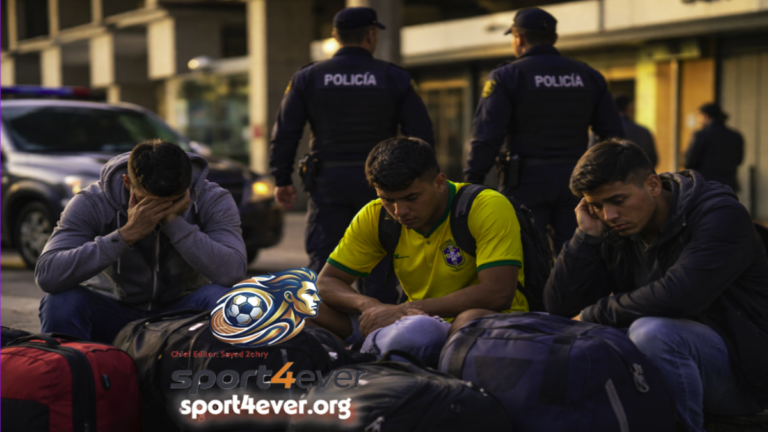
The consequences of the war were severe for both countries. Economic conditions worsened, and bilateral relations were strained for many years. More importantly, the war led to the repatriation of approximately 130,000 Salvadorans from Honduras, increasing pressure on El Salvador’s limited resources and contributing to the internal unrest that later led to the Salvadoran Civil War in the 1980s.
Despite El Salvador’s victory in the football match and its theoretical qualification for the next round of the World Cup qualifiers, it could not actually participate in the 1970 World Cup finals due to the complexities of the conflict.
The “Football War” remains a stark reminder that sports, despite their ability to unite peoples, can sometimes become a pretext for unleashing accumulated animosity. It is a cautionary tale about the dangers of extreme nationalism, the impact of deep social and economic issues on relations between nations, and how a small spark can ignite the flames of a widespread conflict……..More
Article Author
Younes Salim
Journalist and Translator
Sports Foundation for Media
Contact us at yonas@sport4ever.org
For the most searched topics
The Fastest Sacking in History – Sacked in 600 Seconds
The Rumble in the Jungle: The Night Muhammad Ali Made History
Cristiano Ronaldo: The Definitive Truth on CR7’s Al-Nassr Future
England vs. West Indies: Women’s Cricket Series
Keywords: Football War, El Salvador, Honduras, 1970 World Cup Qualifiers, Border Dispute, Migratory Crisis, Agrarian Reform, Humanitarian Crisis, Hundred Hours War, International Intervention, OAS, Central America, Nationalistic Fever, Post-War Consequences, Historical Conflict, Sports and Politics, Regional Tensions, Diplomatic Crisis, Ceasefire, Football Trigger.