Physical Address
304 North Cardinal St.
Dorchester Center, MA 02124
 Skip to content
Physical Address
304 North Cardinal St.
Dorchester Center, MA 02124
Your favorite sports world
Your favorite sports world
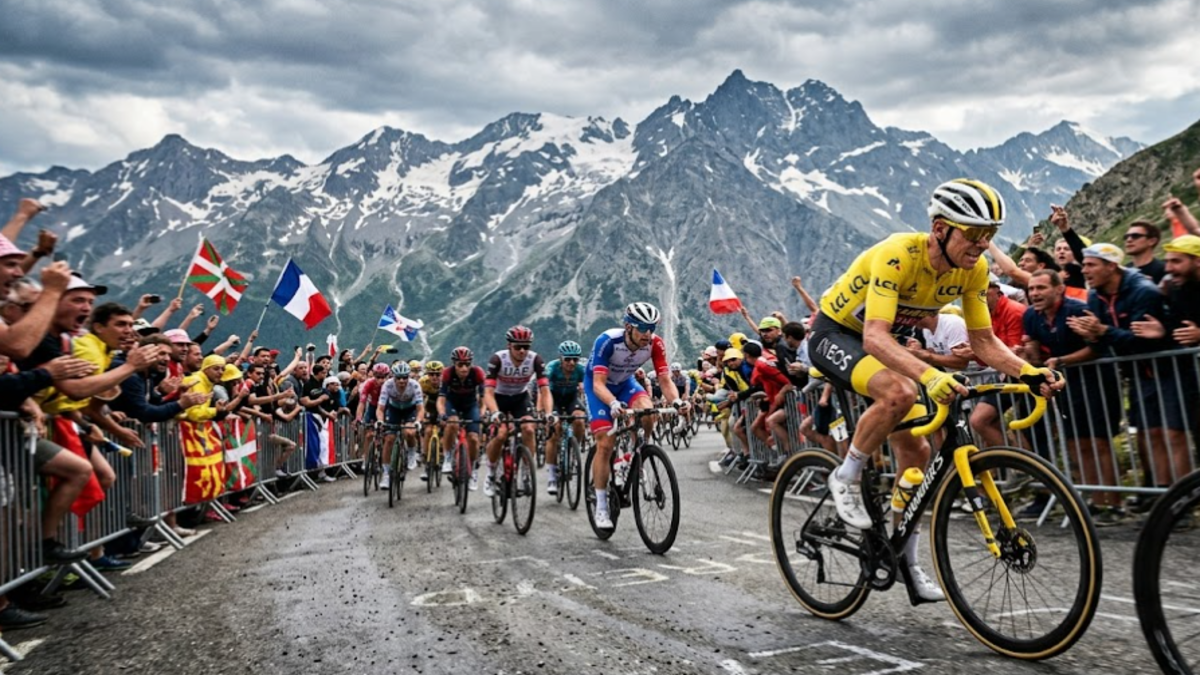
BARCELONA – Sport 4 ever: The Tour de France has ended with Tadej Pogačar securing his fifth overall victory, adding another chapter to his remarkable career after three weeks of racing that began in Barcelona and concluded in Paris. The Slovenian finished ahead of Remco Evenepoel and teammate Isaac Del Toro, while Mads Pedersen, Richard Carapaz and Del Toro claimed the other major individual jerseys. But how did Pogačar dominate the race, and which riders emerged as the biggest stories of the Tour?

Tadej Pogačar completed the Tour de France as overall champion after a race that combined high mountains, sprint battles, time trials and an unusually competitive final day in Paris.
The UAE Team Emirates-XRG leader finished the 21-stage race with a total time of 73 hours, 56 minutes and 26 seconds. Remco Evenepoel, riding for Red Bull-Bora-Hansgrohe, finished second, 6 minutes and 26 seconds behind the Slovenian.
Isaac Del Toro made it a one-three finish for UAE Team Emirates-XRG. The Mexican rider crossed the line third overall, 9 minutes and 42 seconds behind his teammate.
The final general classification also highlighted the strength of a new generation of riders. France’s Paul Seixas finished fourth, 11 minutes and 56 seconds behind Pogačar, while Lenny Martinez took fifth at 13 minutes and 2 seconds.

Mattias Skjelmose finished sixth, followed by Juan Ayuso in seventh. Richard Carapaz placed eighth, Tom Pidcock ninth and Jordan Jegat completed the top 10.
The final standings confirmed Pogačar’s superiority across the three-week race. He never dropped outside the top four in the general classification and ultimately created a gap of more than six minutes over Evenepoel.
The Slovenian’s victory also underlined his status as one of the defining riders of his generation. His fifth Tour title places him among the most successful riders in the history of the race.
The Tour began on July 4 with a team time trial in Barcelona, where Visma-Lease a Bike took the opening stage. The second stage brought another early surprise, as Isaac Del Toro won in Barcelona and moved into the spotlight before Pogačar took control of the race.
Pogačar won the third stage between Granollers and Les Angles, immediately demonstrating that he would be a central figure in the fight for the yellow jersey.
The race eventually covered 3,321.2 kilometres before the final celebrations in Paris.
Pogačar’s success was built on consistency as much as individual brilliance. The Slovenian repeatedly placed himself among the strongest riders whenever the road climbed, while also limiting the damage on stages where his main rivals could challenge him.
One of his most important early performances came on Stage 6, a mountain route from Pau to Gavarnie-Gèdre. Pogačar won the stage in 4 hours, 32 minutes and 7 seconds.
Jonas Vingegaard finished second, 2 minutes and 38 seconds behind the Slovenian on the stage, while Del Toro and Evenepoel crossed the line together in the next group.
That result demonstrated the depth of the competition at the front of the race. Pogačar had to contend with familiar rivals such as Vingegaard and Evenepoel, while Del Toro, Seixas and other younger riders continued to challenge for positions near the top of the classification.
The battle for overall honours later became increasingly favourable to Pogačar. Evenepoel eventually emerged as his closest challenger, while Vingegaard was unable to maintain the same position in the final standings.
Pogačar’s five stage victories were another key part of his campaign. According to the final race reporting, he remained inside the top four of the general classification throughout the Tour, a level of consistency that helped him build a substantial advantage before the final weekend.
The most dramatic mountain moments came late in the race.
Richard Carapaz won Stage 18 in the Alps, while Pogačar’s team lost an important domestique during the stage. The following day, however, Pogačar responded with a major victory on the iconic climb of Alpe d’Huez.
The Slovenian’s performance on Stage 19 became one of the defining moments of the Tour. He took the victory after a long battle on the famous ascent, reinforcing his grip on the yellow jersey as the race entered its final stages.
The result also showed how the race had developed into a contest between established champions and riders looking to establish themselves at the highest level.
Evenepoel remained the most significant threat to Pogačar in the final classification. The Belgian eventually finished more than six minutes behind the winner, but his second-place finish represented another strong Grand Tour performance.
Del Toro’s third position was equally significant. His performance helped UAE Team Emirates-XRG dominate the podium, with two of its riders finishing among the top three.
The final general classification provided a mixture of established names and emerging talent.
Behind Pogačar, Evenepoel and Del Toro, Paul Seixas delivered one of the strongest performances by a young French rider in the race. His fourth-place finish put him ahead of several experienced competitors and gave French cycling a major reason for optimism.
Lenny Martinez finished fifth, another strong result for a rider who has established himself as a serious climbing talent.
Skjelmose placed sixth, while Juan Ayuso finished seventh. The Spanish rider had been expected to play a major role in the overall battle, but ultimately ended the Tour outside the top five.
Carapaz finished eighth overall while also winning the mountains classification. His performance combined aggressive racing with successful attacks in the high mountains.
Tom Pidcock took ninth, continuing his development as a rider capable of competing at the highest level across demanding stage races.
Jordan Jegat completed the top 10.
The next positions included Yannis Voisard, Tobias Halland Johannessen, Sepp Kuss and Davide Piganzoli. Jai Hindley, Nicolas Prodhomme, Tiesj Benoot and Quinn Simmons were also among the riders who completed the upper section of the final classification.
The final results also illustrated the international character of modern professional cycling. Riders from Slovenia, Belgium, Mexico, France, Denmark, Spain, Ecuador, Britain, Switzerland, Norway, the United States, Italy and Australia all featured prominently in the standings.
For French fans, the performances of Seixas and Martinez were particularly important. Their presence near the top of the classification offered a glimpse of a potentially stronger future for French riders in the general classification.
The yellow jersey was not the only major competition during the Tour.
Mads Pedersen won the green jersey awarded to the best rider in the points classification. The Lidl-Trek rider produced a consistently strong campaign in the sprints and accumulated points throughout the race.
His success reflected an approach based not only on individual stage victories but also on regular finishes near the front. Pedersen’s consistency ultimately allowed him to take the points competition.
The mountains classification went to Richard Carapaz. The Ecuadorian rider attacked repeatedly in the high mountains and used his strength on difficult climbs to secure the polka-dot jersey.
Carapaz also won two stages during the Tour, making his performance one of the most impressive among riders outside the overall podium.
The white jersey for the best young rider went to Isaac Del Toro. His third-place finish overall made the achievement even more notable.
Del Toro’s performance was one of the clearest signs of the changing landscape of professional cycling. The Mexican rider combined overall consistency with the ability to compete against the leading favourites in difficult mountain stages.
The final team classification was won by Lidl-Trek, which narrowly finished ahead of UAE Team Emirates-XRG.
That result provided another dimension to the competition. While Pogačar’s team controlled the individual general classification, Lidl-Trek showed its collective strength across the full three-week race.
The route offered a wide variety of challenges from the opening weekend.
The first stage in Barcelona was a 19.6-kilometre team time trial, setting the tone for a race in which teams had to balance individual ambitions with tactical cooperation.
The second stage covered 168.5 kilometres between Tarragona and Barcelona. Del Toro won that stage, while Pogačar soon moved to the centre of the overall battle.
Stage 3 between Granollers and Les Angles covered 195.9 kilometres and ended with Pogačar taking victory. The early stages therefore provided an immediate indication that the Slovenian would be a leading contender for the yellow jersey.
As the race progressed, the peloton moved through a demanding sequence of stages that tested sprinters, climbers and general-classification contenders.
The mountains eventually became the main arena for the battle at the top of the standings. Pogačar’s ability to gain time while maintaining consistency gave him the advantage he needed.
Yet the race was not simply a procession.
Evenepoel produced a major statement by beating Pogačar in the sprint finish on Stage 15. The Belgian’s victory showed that the overall leader could still be challenged on individual days.
That stage also demonstrated the different strengths of the two riders. Evenepoel was able to exploit his speed and timing, while Pogačar remained focused on protecting his overall advantage.
The later Alpine stages then brought further changes to the race narrative. Carapaz’s victory on Stage 18 and Pogačar’s response at Alpe d’Huez on Stage 19 created a dramatic conclusion to the mountain battle.
The final stage in Paris brought an unusual conclusion to the race.
Rather than simply serving as a ceremonial procession, the final day produced another competitive battle. Mathieu van der Poel won the stage, narrowly beating his Alpecin-Premier Tech teammate Jasper Philipsen.
The victory gave Van der Poel another major moment at the Tour and provided a fitting sporting finale to three weeks of racing.
Pogačar, meanwhile, was able to celebrate his overall victory in the French capital.
The final general classification did not change significantly during the closing stage, with the decisive time gaps already established before the riders reached Paris. Pogačar finished first overall, followed by Evenepoel and Del Toro.
The final time gap between Pogačar and Evenepoel was 6 minutes and 26 seconds. Del Toro completed the podium at 9 minutes and 42 seconds, while Seixas finished fourth at 11 minutes and 56 seconds.
The outcome gave UAE Team Emirates-XRG two riders in the top three and confirmed Pogačar’s dominance over the general classification.
For fans, however, the final stage also provided an exciting conclusion in its own right. Van der Poel’s narrow victory over Philipsen ensured that the final day remained competitive rather than becoming merely a celebration of the overall winner.
The race’s conclusion in Paris therefore combined two contrasting stories: Pogačar’s controlled march to another yellow jersey and an aggressive fight for stage honours among the riders behind him.
The latest edition of the Tour leaves several important questions for the future of professional cycling.
Pogačar’s fifth overall title strengthens his position among the sport’s modern greats. His ability to win mountain stages, remain consistent across three weeks and maintain a substantial advantage over his rivals made him the clear overall winner.
Evenepoel’s second place, meanwhile, confirms that he remains one of the strongest challengers in the Grand Tours.
Del Toro’s third place may prove equally important. The Mexican rider not only reached the overall podium but also won the white jersey, demonstrating that he can compete with the world’s leading riders over a demanding three-week race.
Seixas’ fourth-place finish was another major development. At the same time, Carapaz’s mountains jersey and stage victories showed the value of aggressive racing even when the yellow jersey is out of reach.
Pedersen’s green jersey highlighted the importance of consistency in the points competition, while Lidl-Trek’s team victory demonstrated that success at the Tour depends on more than one rider.
The final results also underline how difficult it is to challenge Pogačar when he combines his climbing ability with tactical intelligence and sustained form.
For the rivals, the challenge now is clear. Evenepoel has demonstrated that he can win stages and finish second overall. Del Toro has announced himself as a future contender. Seixas and Martinez have shown that France has young riders capable of competing near the top.
The Tour’s latest edition therefore ends with a familiar winner but an increasingly competitive group of challengers.
The official race information, classifications and results are available through the official Tour de France website.
Tadej Pogačar won the general classification with a total time of 73 hours, 56 minutes and 26 seconds.
Remco Evenepoel finished second, 6 minutes and 26 seconds behind Pogačar.
Mads Pedersen won the points classification and took the green jersey.
Richard Carapaz won the polka-dot jersey after a strong campaign in the high mountains.
….Read More
Contact us at: info@sport4ever.org