Physical Address
304 North Cardinal St.
Dorchester Center, MA 02124
 Skip to content
Physical Address
304 North Cardinal St.
Dorchester Center, MA 02124

Your favorite sports world
Your favorite sports world
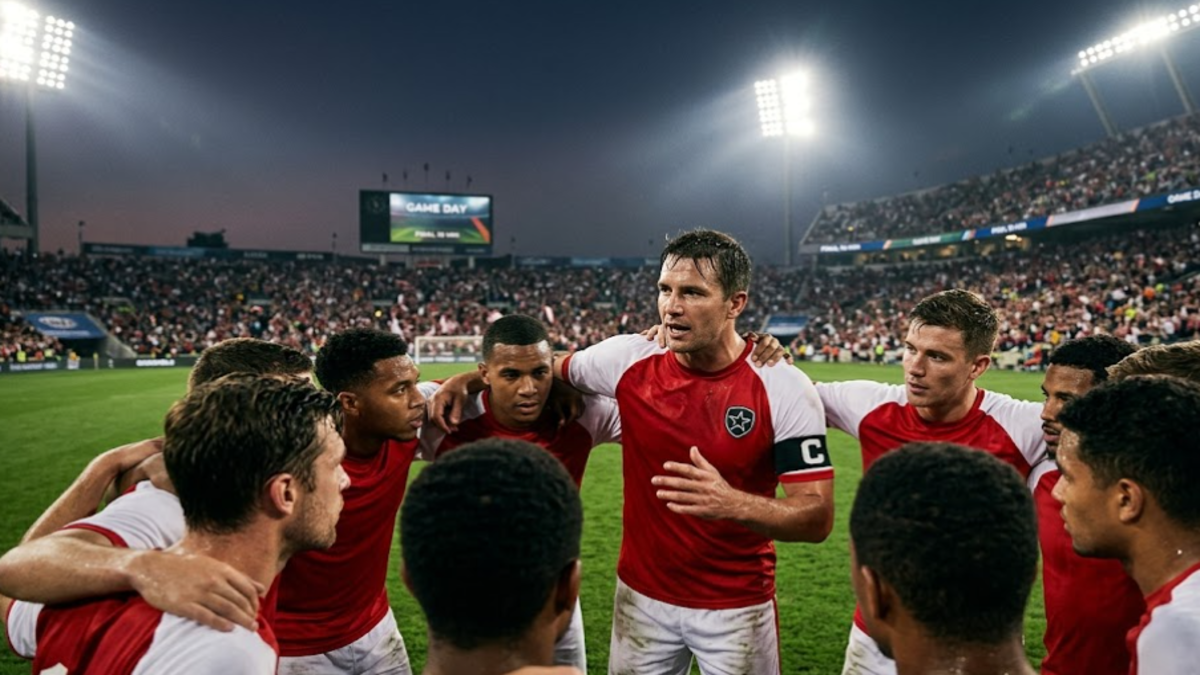
LONDON – Sport 4 ever: What Makes a Great Sports Captain?

A captain can wear an armband, take the coin toss or walk at the front of a team, but leadership in sport goes far beyond the symbol. The strongest captains influence teammates through their behaviour, decision-making, communication and ability to remain composed when pressure rises. Recent discussions around leaders such as Ben Stokes, Harry Kane and other prominent figures have again raised a familiar question: what makes a great sports captain?
Great captains rarely need to remind teammates that they are leaders. Their actions usually make the message clear.
A captain who trains seriously, accepts difficult assignments and continues working after a poor performance establishes standards without making a speech. Teammates notice those habits, particularly when the pressure becomes intense.
This is one reason sporting leadership cannot be measured simply through statistics. A player can score heavily, take important wickets or produce spectacular goals and still struggle to lead a group. Captaincy requires another level of responsibility.

Sports psychology research and coaching guidance commonly identify qualities such as consistency, courage, care for teammates and accountability as important characteristics of effective captains. The responsibility extends beyond performing well personally; captains must help create an environment in which others can perform.
Ben Stokes provides a useful modern example from cricket. When he became England’s Test captain, the International Cricket Council highlighted his aggressive intent, willingness to make bold tactical decisions and ability to influence matches with both bat and ball. His leadership was not separated from his performance; his competitiveness became part of the team’s identity.
But leading by example does not mean trying to dominate every moment.
The best captains understand when their teammates need encouragement, when they need space and when a difficult conversation is necessary. They know that leadership is ultimately about making the team stronger, not making the captain look important.
Sport moves quickly. In football, a captain may have only seconds to organise teammates after conceding a goal. In cricket, a captain may need to explain a tactical adjustment between deliveries or overs. In basketball, a short conversation during a timeout can change the mood of an entire team.
Communication therefore becomes one of the most valuable tools available to a captain.
A strong captain communicates clearly without creating unnecessary noise. Instructions need to be understandable, particularly when teammates are tired, frustrated or under pressure.
There is also an important difference between speaking and communicating.
A captain who talks constantly may not necessarily be an effective communicator. Sometimes the most important leadership moment comes from listening to a teammate who is struggling.
That is particularly important in modern professional sport, where squads contain players with different personalities, backgrounds and levels of experience. One teammate may respond to direct criticism, while another may perform better after receiving reassurance.
The captain has to recognise those differences.
Recent comments from England players about Stokes have repeatedly focused on his influence around the group. During a Test against Australia, fast bowler Brydon Carse praised Stokes’s character, enthusiasm and ability to give the bowling group a simple, clear message before an important period of play.
That example illustrates an important principle: effective communication does not have to be complicated.
Sometimes a captain’s job is simply to remove uncertainty.
Pressure is unavoidable in elite sport.
A captain is often expected to remain calm when teammates are losing confidence, supporters are becoming impatient and opponents are gaining momentum. That does not mean a captain must never show emotion. Instead, the challenge is to control emotion rather than allowing emotion to control decisions.
Football provides some of the clearest examples.
The captain is often the player teammates look toward after a mistake, controversial decision or sudden change in the match. A calm reaction can prevent frustration from spreading through the team.
FIFA’s coverage of former Brazil captain Thiago Silva described the burden that can accompany the armband. Silva spoke about the expectation that a captain should almost become a superhero for the team, while also acknowledging the weight that comes with being watched and judged.
That pressure explains why resilience matters.
A captain will make mistakes. A tactical decision will sometimes fail. A penalty may be missed. A substitution may not work. A team may lose a match that it expected to win.
The response matters more than pretending mistakes will never happen.
Strong captains accept responsibility without allowing one defeat to define the team. They help players understand what went wrong, identify what can be improved and then move forward.
That ability to recover can become contagious.
When players see their captain refusing to panic after adversity, they are more likely to believe that the situation can still be changed.
Being popular inside a dressing room can help, but captaincy sometimes requires decisions that teammates will not immediately like.
A captain may have to change tactics, leave an experienced player out of a crucial moment or tell a star performer that their current approach is hurting the team.
Those decisions require courage.
A captain who always chooses the easiest option may preserve relationships in the short term but damage the team’s chances in the long term. Leadership requires the ability to consider the bigger picture.
This is particularly visible in cricket, where captains must make tactical choices involving field placements, bowling changes, batting orders and declarations. The decision may be criticised within minutes, yet the captain still has to make it.
Stokes’s early Test captaincy was notable for attacking field settings and creative bowling changes. The ICC’s assessment of his leadership pointed to his willingness to make bold decisions rather than simply follow conventional patterns.
However, good decision-making also means knowing when to change.
A captain cannot become attached to a particular philosophy simply because it worked previously.
England’s experience under Stokes also demonstrates that point. After a heavy Ashes defeat, Stokes acknowledged that the team’s approach needed reassessment because opponents had learned how to counter its aggressive style.
That is an important lesson for every captain.
Confidence is valuable. Stubbornness is not.
A successful team rarely consists of identical personalities.
Some players are naturally vocal. Others prefer to communicate privately. Some thrive under attention, while others become uncomfortable when placed in the spotlight.
A captain must find ways to bring those different personalities together.
This is where empathy becomes a powerful leadership quality.
A captain who understands teammates can recognise when confidence is falling, when a player needs encouragement or when tension inside the group could become a problem.
The objective is not to become everyone’s best friend.
The objective is to build trust.
Trust allows teammates to accept criticism because they understand that the captain is trying to improve the team rather than attack an individual.
It also allows players to admit mistakes.
A player who is frightened of being blamed may hide problems. A player who trusts the leadership group is more likely to communicate honestly.
That distinction can have a major effect on performance.
Research into sports captaincy has similarly suggested that athletes who possess strong social skills and the ability to motivate others can be particularly suited to leadership roles.
The lesson is straightforward: technical ability may earn a place in the starting lineup, but interpersonal ability can determine whether someone becomes a genuine leader.
One of the easiest ways to identify a weak captain is to watch what happens after defeat.
If the captain immediately blames teammates, officials, coaches or external circumstances, confidence in that leader can disappear quickly.
Great captains accept their share of responsibility.
That does not mean taking the blame for everything. It means recognising that leadership carries responsibility when things do not go according to plan.
Accountability also creates credibility.
A captain who demands discipline from teammates but ignores their own mistakes will struggle to command respect. By contrast, a captain who can say, in effect, “I got that wrong”, demonstrates that honesty is expected from everyone.
This quality is particularly important after major defeats.
Stokes’s leadership provides another example. Following England’s Ashes setback, he did not simply defend the team’s strategy. He acknowledged that the approach required reconsideration and recognised that opponents had adapted to England’s methods.
That willingness to reassess is a form of leadership in itself.
Winning teams do not improve because their leaders insist they are always right. They improve because their leaders are willing to identify weaknesses.
Leadership does not mean controlling every decision.
The strongest captains understand that coaches, senior players, analysts and specialist teammates all possess knowledge that can improve the team’s performance.
A captain who listens can make better decisions.
In cricket, a bowler may understand the pitch better than anyone else on the field. In football, a defender may see a tactical problem developing before the captain does. In basketball, a player who has just entered the game may immediately recognise an opponent’s defensive weakness.
The captain must be open to that information.
This is why modern leadership increasingly looks like collaboration rather than command.
A captain still has authority, but authority becomes more effective when teammates feel involved.
Stokes has repeatedly spoken about alignment with the coaching staff and the importance of working collectively toward a common objective. His leadership partnership with England’s coaching structure demonstrated that a captain does not operate in isolation.
That principle applies across sports.
The captain is part of the team, not separate from it.
When people describe great captains, courage is often associated with spectacular moments: taking the final shot, facing the fastest bowler, demanding the ball in a crucial situation or stepping forward during a difficult match.
Those moments matter.
But leadership courage is often quieter.
It can mean confronting a teammate about poor discipline. It can mean admitting that a tactical plan has failed. It can mean protecting a younger player from unnecessary pressure. It can mean making an unpopular decision because the captain believes it is right for the team.
Courage also involves accepting responsibility.
Thiago Silva’s reflections on captaincy illustrate how leadership can carry a significant emotional burden. Wearing the armband can increase expectations because teammates, supporters and opponents all attach meaning to the role.
A captain therefore needs emotional strength as well as sporting ability.
The player must be prepared to stand in front of the group when things are going badly.
That is often when leadership matters most.
Perhaps the clearest measure of a great captain is not what happens to the captain’s own statistics.
It is what happens to the people around them.
A great captain can help a young player become more confident. They can encourage an experienced teammate to take greater responsibility. They can turn a group of talented individuals into a functioning unit.
This is why leadership is closely connected to development.
A captain should not feel threatened when another player becomes influential. Instead, the captain should welcome the growth of leadership across the squad.
The ideal team does not depend on one voice.
It develops several leaders who can step forward when circumstances demand it.
That approach creates resilience. If the captain is injured, suspended or substituted, the team can continue functioning because leadership has been shared.
The same principle can be seen in successful national teams, club sides and international sporting programmes.
A captain’s greatest achievement may ultimately be creating teammates who no longer need constant direction.
Of course, sport remains about competition.
Captains are judged by results. Victories strengthen reputations, while defeats bring criticism. No leadership philosophy can completely separate a captain from the scoreboard.
Yet results alone cannot explain why certain captains command lasting respect.
A captain may win trophies because they inherited an exceptional squad. Another may lead a less talented team through difficult circumstances and still leave a powerful impression.
Leadership should therefore be judged through context.
Did the captain improve the team’s standards?
Did players trust the leader?
Did the team respond positively during difficult moments?
Did the captain accept responsibility?
Did younger players develop?
Did the captain make teammates believe they could achieve more than they initially expected?
Those questions provide a deeper picture than a trophy cabinet alone.
The most respected captains combine competitiveness with responsibility. They want to win, but they also understand that the way a team responds to adversity can become part of its identity.
There is no single formula for captaincy.
Some great captains are loud and emotional. Others lead quietly. Some dominate through tactical intelligence, while others influence teammates through relentless work. Some are natural speakers; others communicate primarily through their actions.
What connects them is credibility.
Teammates have to believe that the captain understands the challenge, shares the pressure and is prepared to make sacrifices for the group.
Recent sporting coverage continues to show that leadership is rarely about the armband alone. Stokes’s influence has been associated with competitiveness, tactical courage, communication and accountability, while football leaders such as Thiago Silva have spoken openly about the responsibility and pressure attached to leading elite teams.
Ultimately, a great sports captain makes people around them better.
They set standards without constantly demanding attention. They communicate when communication is needed and listen when listening matters more. They accept responsibility after defeat, remain composed under pressure and have the courage to change direction when the evidence demands it.
Most importantly, they understand that captaincy is not about being the most important person on the team.
It is about helping the team become more important than any individual.
Leadership through example is one of the most important qualities. Players are more likely to follow a captain whose actions match their expectations of others.
No. Sporting ability helps, but communication, trust, decision-making, resilience and accountability are also essential leadership qualities.
A captain can motivate teammates through clear communication, encouragement, high standards and personal example, while adapting their approach to different personalities.
Yes. Captaincy does not require a loud personality. Quiet leaders can be highly effective through consistency, preparation, listening and strong decision-making.
….Read More
Contact us at: info@sport4ever.org