Physical Address
304 North Cardinal St.
Dorchester Center, MA 02124
 Skip to content
Physical Address
304 North Cardinal St.
Dorchester Center, MA 02124

Your favorite sports world
Your favorite sports world
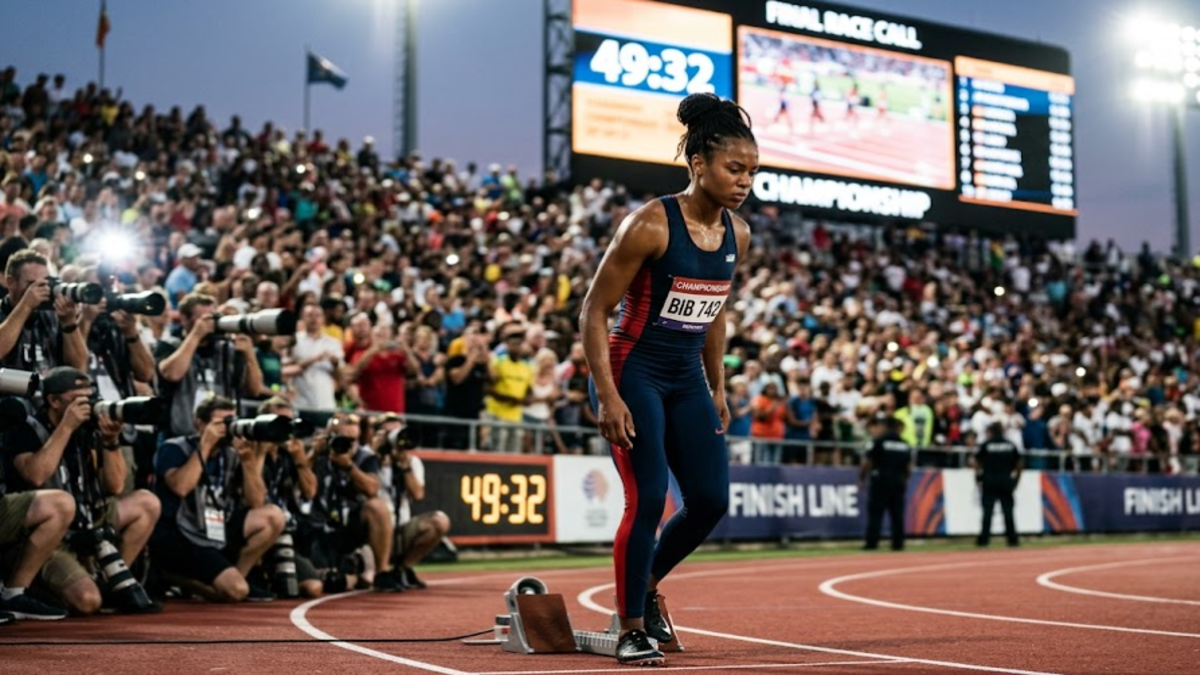
LONDON – Sport 4 ever: Why athletes perform better under pressure has become an increasingly important question in modern sport, as psychologists and coaches examine what separates athletes who rise to decisive moments from those who struggle when the stakes are highest. From penalty kicks and championship points to Olympic finals, pressure can either sharpen concentration or disrupt a skill that normally feels automatic. So what makes some competitors turn pressure into an advantage?

The popular image of the athlete who suddenly becomes better when everything is on the line is often described as being “clutch”. It can appear almost mysterious: a player finds another level late in a match, a shooter becomes more precise with a medal at stake, or a tennis player produces an aggressive winner at the most important point.
Sports psychology offers a more complicated explanation.
Pressure does not automatically improve performance. Instead, its effect depends on how an athlete interprets the situation, how much control they feel they have and whether they can direct their attention towards the task rather than the consequences.
Research into clutch performance has increasingly focused on this distinction. Athletes who respond positively to pressure can become highly task-focused, while others may become distracted by fear of failure, expectations from spectators or concern about the result.

A major review of research into athletes performing under pressure identified several recurring factors associated with successful performances. Among them were self-belief, mental toughness, constructive interpretations of pressure and the use of psychological strategies.
That helps explain why pressure can sometimes produce the opposite of what people expect. The same situation that overwhelms one competitor can concentrate another.
The difference is not necessarily talent. It can be the way the athlete responds to the psychological demands of the moment.
One of the simplest explanations is that an important competition can remove distractions.
When an athlete knows that a single action could determine the outcome, attention may become more concentrated. Instead of thinking about everything that could happen, the competitor focuses on the immediate task.
A footballer preparing to take a penalty does not need to solve the entire match. The task is narrower: choose a target, establish a routine and execute the kick.
A basketball player taking a decisive free throw faces a similar situation. The score, crowd and consequences are all present, but the successful athlete attempts to reduce the problem to the action immediately in front of them.
This task-focused approach is important because pressure can consume mental resources. Worrying about reputation, selection, contracts or the possibility of making a mistake can compete for attention with the technical demands of the sport.
The challenge for elite performers is therefore not to eliminate pressure completely. It is to prevent pressure from taking control of their attention.
Sport psychologists often work on routines that help athletes return to the present moment. Breathing patterns, visualisation, positive self-talk and familiar pre-performance routines can give competitors something controllable to concentrate on.
These techniques do not guarantee success, but they can help athletes avoid becoming trapped in thoughts about the consequences of failure.
Experience is another important part of the equation.
An athlete who has repeatedly competed in high-stakes situations has already encountered many of the sensations associated with pressure. The heartbeat may accelerate, muscles may feel tense and thoughts may become more intense, but the situation itself is no longer completely unfamiliar.
That familiarity can reduce the shock of the moment.
Abhinav Bindra, India’s first individual Olympic gold medallist, offered a similar philosophy when advising Indian shooters ahead of the Paris Games. In reporting from Reuters, Bindra urged athletes to prepare for competition on an “imperfect day”, rather than expecting ideal conditions. His message was built around preparation for uncertainty and the reality that the competition environment will not necessarily behave like training.
The principle is significant beyond shooting.
An athlete cannot control every noise in a stadium, every referee’s decision, every opponent’s action or every unexpected mistake. What can be trained is the response to those events.
Repeated exposure to demanding situations can therefore make pressure more manageable. The athlete learns that nervousness is not necessarily evidence that something is going wrong.
The phrase “performing under pressure” can be misleading if it suggests that successful athletes simply remain calm.
In reality, elite competitors may still experience substantial stress. The difference is that they can channel that energy into useful action.
A high-pressure contest can increase alertness and motivation. An athlete may become more aware of the opponent, more decisive in movement and more committed to completing the task.
This is particularly important in sports where reaction time, concentration and decision-making are central.
A competitor who sees pressure as a challenge may think differently from one who sees it as a threat. The first asks, in effect, “How can I handle this?” The second may become preoccupied with “What if I fail?”
That distinction can influence confidence and attention.
Research examining clutch performance has repeatedly pointed towards perceived control as an important factor. Athletes who believe they can influence what happens are better positioned to remain engaged with the task.
The pressure itself may not disappear. Instead, its meaning changes.
A final-minute situation can become an opportunity to execute rather than a warning of impending failure.
This helps explain why some athletes appear to thrive when the stakes rise.
There is, however, a narrow boundary between useful pressure and overwhelming pressure.
The same psychological response that can increase concentration can also interfere with performance when anxiety becomes excessive.
“Choking” describes a substantial deterioration in performance during an important situation despite an athlete possessing the ability to perform the required skill.
In those moments, competitors may begin consciously controlling movements that normally happen automatically.
A highly trained tennis player does not normally need to think through every stage of a serve. A professional golfer does not consciously calculate every movement involved in a familiar putting stroke.
Under intense pressure, however, the athlete may start monitoring the mechanics of the action.
That additional attention can interfere with well-practised movement.
Another problem is distraction. A competitor may think about the scoreboard, the crowd, the coach, social media reaction or the consequences of losing. The more attention that moves away from the immediate task, the fewer mental resources remain available for execution.
This explains why pressure does not produce a universal effect.
Some athletes become more focused. Others become more self-conscious.
The difference can depend on personality, experience, preparation, confidence, the complexity of the skill and the athlete’s interpretation of the situation.
Confidence does not mean believing that an athlete will win every time.
Instead, effective confidence can mean believing that the athlete has the ability to respond to whatever happens.
That distinction is crucial.
An athlete who believes they must perform perfectly can become frightened by every small mistake. A competitor with stronger self-efficacy may accept that mistakes are possible and concentrate on the next action.
Research into clutch performance has highlighted self-efficacy as one of the factors that can help athletes handle high-pressure situations.
The logic is straightforward. If an athlete trusts their preparation, pressure is less likely to become proof that they are in danger of failing.
The competitor can interpret physical signs of stress — faster breathing, increased heart rate or heightened alertness — as part of competition rather than as evidence of losing control.
That interpretation can influence behaviour.
Instead of retreating, an athlete may attack. Instead of hesitating, they may commit to a decision. Instead of replaying an earlier mistake, they may focus on the next opportunity.
Confidence therefore becomes less about feeling completely comfortable and more about remaining functional while uncomfortable.
Training the body is only one part of preparing for pressure.
Athletes also rehearse how they want to think and behave when circumstances become difficult.
Pre-performance routines are particularly useful because they provide a familiar sequence before an important action. The routine can narrow attention and create a sense of consistency even when the surrounding environment changes.
Visualisation can serve a similar purpose.
An athlete may mentally rehearse a particular movement, situation or competitive scenario before it happens. The objective is not to predict the future perfectly but to become familiar with the demands of competition.
Self-talk is another commonly used strategy.
Short, task-specific instructions can prevent the athlete from becoming consumed by broad worries. Instead of thinking about the importance of a final, the competitor may focus on a technical cue that has already been practised.
These approaches are increasingly treated as part of performance preparation rather than as something separate from physical training.
Recent reporting on elite sport has also highlighted the growing role of sports psychologists in helping athletes manage pressure, stress, sleep and expectations. The message emerging from high-performance environments is that mental preparation is not simply an emergency response when an athlete is struggling. It is a skill that can be trained.
The scientific discussion has also moved beyond the traditional question of why athletes “choke”.
Researchers are increasingly interested in why some athletes succeed despite intense pressure.
That change matters because studying failure alone gives an incomplete picture.
A substantial qualitative review examined research involving athletes, coaches and sports practitioners to identify factors linked to successful performance in demanding situations. Self-efficacy, mental toughness, positive interpretations of pressure and psychological strategies emerged as recurring themes.
The findings suggest that clutch performance is not simply an unexplained personality trait.
Athletes can develop skills that help them manage demanding situations.
That does not mean every competitor can be transformed into a perfect pressure performer. Individual differences remain important, and there is no single mental technique that works for everyone.
Instead, the evidence points towards a combination of preparation, experience, confidence, attentional control and emotional regulation.
This is particularly relevant because modern athletes compete in environments where pressure extends beyond the field of play.
Social media, constant coverage, sponsorship obligations and public expectations can make the psychological demands of elite sport considerably more complicated than the few minutes of competition visible to spectators.
The best pressure performers are rarely people who have never experienced nerves.
They are often athletes who have learned what to do when nerves arrive.
That distinction can change the entire competitive experience.
Preparation gives athletes reference points. They know what their routine looks like, what technical cues they need and how they want to respond after a mistake.
An unexpected event may still cause stress, but it does not necessarily destroy the plan.
This is why coaches increasingly simulate difficult situations during training. A team can practise defending a narrow lead, taking penalties after fatigue, playing in hostile environments or making decisions with limited time.
The objective is to make pressure less unfamiliar.
If the athlete has already experienced something similar during training, the competition situation may feel demanding without feeling completely unknown.
The approach also helps athletes understand that successful performance does not require perfect emotional control.
A competitor can feel nervous and still execute.
That may be one of the most important lessons in modern sports psychology.
There is no single level of pressure that produces the best performance for every athlete.
A situation that motivates one competitor may overwhelm another.
Even the same athlete can react differently depending on fatigue, injury, confidence, previous results and the importance of the competition.
A championship final following months of preparation may feel very different from an ordinary league fixture.
That means coaches need to understand the individual rather than simply telling athletes to “stay calm”.
For some competitors, increased activation may help them become more aggressive and alert. Others may need techniques that reduce excessive tension.
The objective is not necessarily to remove emotion.
It is to find a state in which emotion supports execution rather than interfering with it.
This individual approach is also why mental training requires repetition. Athletes need opportunities to discover which routines, thoughts and strategies work for them.
The idea that great athletes simply possess extraordinary nerves is attractive, but the evidence paints a more nuanced picture.
Successful competitors can still feel fear, tension and uncertainty.
What separates them is often their ability to keep those feelings from dictating their behaviour.
They trust preparation. They focus on controllable actions. They interpret pressure as a challenge rather than automatically treating it as a threat. They use routines to maintain attention and draw on previous experiences when the situation becomes difficult.
And when something goes wrong, they recover.
That last point may be the most important.
Pressure performance is not necessarily about producing a flawless moment. It is about remaining capable of making the next decision after something unexpected happens.
The athlete who misses a shot but immediately resets, the tennis player who loses a point but returns with the same routine, or the runner who encounters an imperfect start but maintains the race plan is demonstrating an important form of resilience.
The ability to recover can be as valuable as the ability to perform perfectly.
For athletes and coaches, the lesson is clear: pressure should not simply be feared or avoided. It should be understood, practised and managed.
When preparation, confidence and attention come together, the pressure of a decisive moment can become a source of energy rather than a barrier.
And that is why some athletes seem to become better precisely when the world is watching.
Yes. Moderate pressure can increase motivation, alertness and concentration, particularly when athletes interpret the situation as a challenge and feel capable of controlling their response.
Excessive anxiety can consume attention and cause athletes to consciously monitor movements that normally happen automatically. Fear of failure and distraction can also interfere with execution.
Preparation, experience, self-confidence, pre-performance routines, visualisation, task-focused attention and effective self-talk can all help athletes manage demanding competitive situations.
Yes. Mental skills can be developed through repeated practice, competition experience, psychological techniques and reflection on how an athlete responds to difficult situations.