Physical Address
304 North Cardinal St.
Dorchester Center, MA 02124
 Skip to content
Physical Address
304 North Cardinal St.
Dorchester Center, MA 02124

Your favorite sports world
Your favorite sports world
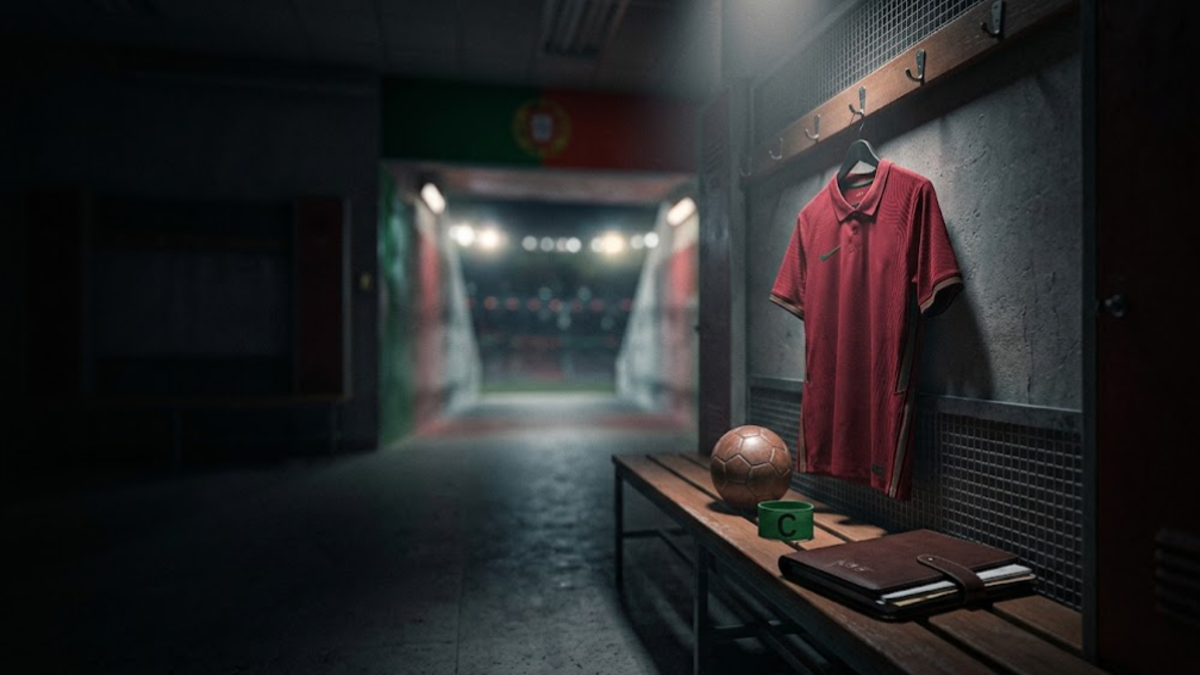
Cristiano Ronaldo is facing disciplinary proceedings from the Portuguese Football Federation (FPF) after leaving Portugal’s national team camp in Copenhagen, Denmark. On 10 October, the federation confirmed that the case would be handled urgently and that the Al Nassr forward had been placed under a non-automatic preventive suspension while the investigation proceeds.

The decision follows Ronaldo’s departure from the national team camp on 30 September amid a reported disagreement with head coach Jorge Jesus. The case raises questions about squad discipline, the responsibilities of a national team captain and the potential consequences for one of Portugal’s most influential footballers.
The disciplinary proceedings concern Ronaldo’s departure from Portugal’s training camp ahead of the team’s Nations League fixtures against Norway and Denmark.
The Portuguese Football Federation’s disciplinary body announced that it had opened a case to examine the possible disciplinary significance of the reported events. The decision was made on 9 October, and the matter was referred to the federation’s Disciplinary Investigation Committee on 10 October.
The FPF classified the case as urgent and confirmed that proceedings would remain confidential until the investigation phase was completed.

At this stage, the federation has announced a preventive measure and an investigation, not a final disciplinary punishment. The outcome will depend on the proceedings, and the definitive sanction, if any, has not been publicly established.
The dispute emerged after Ronaldo was left on the bench during Portugal’s 2–1 victory over Norway on 27 September. According to Ronaldo’s public account, he had expected to play for around 30 minutes after discussing his role with the coach.
Ronaldo said he warmed up but was ultimately not introduced. He subsequently criticised Jesus, alleging that the coach had failed to honour an understanding between them.
The forward left the national team camp in Copenhagen on 30 September, before Portugal’s next fixture against Denmark. The departure prompted the federation to confirm that he had left the squad, although its initial announcement did not provide a detailed explanation.
The disagreement is therefore central to understanding the case, but it should not be confused with the formal disciplinary question: whether Ronaldo’s departure constituted an offence under the applicable rules.
The FPF has distinguished between an automatic preventive suspension that applied before the disciplinary case was formally opened and the non-automatic preventive suspension subsequently imposed.
This distinction matters because a preventive suspension is not the same as a final punishment. It is a measure taken while a case is being examined, rather than a definitive ruling on the player’s responsibility.
The federation has not publicly confirmed the final sanction Ronaldo could receive. Reports about possible suspensions should therefore be treated cautiously until an official decision establishes the applicable penalty.
The confirmed procedural developments are:
The immediate concern is whether the proceedings will affect Ronaldo’s availability for future Portugal fixtures. Any sporting consequences will depend on the disciplinary outcome and the terms of any final decision.
Ronaldo’s status as captain and his long-standing importance to the national team make the case particularly significant. Nevertheless, his reputation and achievements do not remove the need to follow the same applicable disciplinary procedures used to assess players’ conduct.
There is also a distinction between disciplinary eligibility and selection. A preventive measure or final suspension may affect whether Ronaldo can play, while the coach remains responsible for decisions about selection and playing time within the applicable rules.
The case does not, by itself, establish that Ronaldo will retire from international football or that Portugal will permanently exclude him from the squad. Neither conclusion should be drawn without further official confirmation.
Ronaldo has publicly acknowledged that his actions may carry consequences and apologised to supporters and teammates for aspects of his conduct surrounding the incident. He has also indicated that he remains willing to represent Portugal.
His explanation centres on the disagreement with Jesus and his view that an understanding about his role had not been respected. That account provides context, but it does not determine whether his departure breached federation rules.
The disciplinary investigation is the mechanism through which the relevant facts and rules must be assessed. Until it concludes, neither the player’s explanation nor public criticism of his decision should be treated as a substitute for a formal ruling.
The Ronaldo case highlights a difficult balance in international football: respecting the status of an experienced captain while maintaining consistent standards across the squad.
A coach’s decisions about playing time can be contentious, especially when a senior player believes expectations were agreed in advance. However, disagreements over selection and the proper handling of those disagreements are separate issues. A player may have legitimate concerns without automatically being entitled to leave a national team camp.
Our assessment is that the FPF should resolve the matter through a transparent and proportionate application of its rules, while respecting the confidentiality of the ongoing investigation. Ronaldo should have the opportunity to present his account, and any sanction should be based on established facts rather than his public profile.
For Portugal, the longer-term priority is to preserve team unity without creating different standards for star players. For Ronaldo, how he responds to the process may be just as important to his relationship with the national team as the eventual disciplinary decision.
Until the FPF publishes a final outcome, the central fact remains that Ronaldo is facing an urgent disciplinary investigation and a preventive suspension—not a publicly confirmed final punishment.
The FPF has imposed a non-automatic preventive suspension while disciplinary proceedings are underway. This is an interim measure, not confirmation of a final sanction.
Ronaldo left the camp in Copenhagen on 30 September following a disagreement with head coach Jorge Jesus. Ronaldo said the coach had not honoured an understanding about his playing time after he was left on the bench against Norway.
No final punishment has been publicly confirmed in the information available for this report. The FPF has referred the case for an urgent investigation.
Potentially, but his availability will depend on the disciplinary outcome and any applicable suspension. It would be premature to identify specific matches he will miss without an official decision.
No. The disciplinary case does not establish that Ronaldo is retiring. He has indicated that he remains willing to represent Portugal, subject to the circumstances and outcome of the case.
Portuguese Football Federation (FPF) — Official disciplinary announcements and decisions — FPF official website
RTP (Portuguese public broadcaster) — Disciplinary decision: Cristiano Ronaldo placed under preventive suspension — Read the report
FIFA — Jorge Jesus retains Cristiano Ronaldo and the core of Portugal’s 2026 World Cup squad — Read the official FIFA report