Physical Address
304 North Cardinal St.
Dorchester Center, MA 02124
 Skip to content
Physical Address
304 North Cardinal St.
Dorchester Center, MA 02124

Your favorite sports world
Your favorite sports world
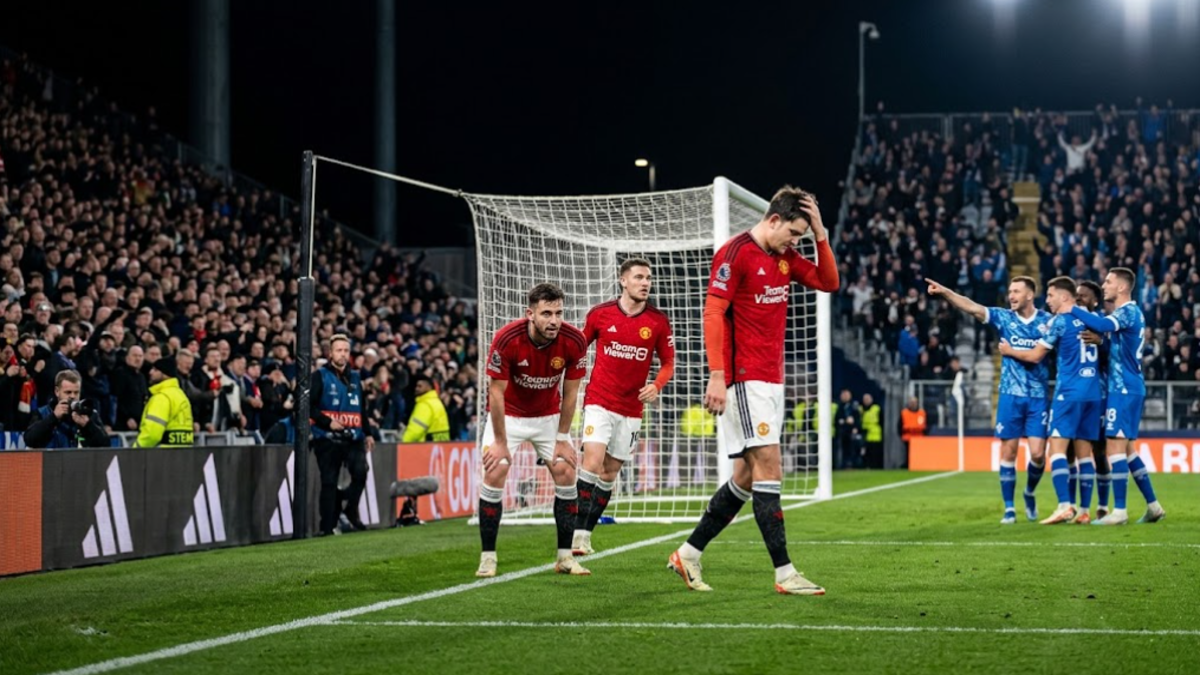
Manchester United’s 4–1 defeat to Como exposed serious problems in defensive organisation, midfield control and the team’s response to pressure. On Wednesday, 21 October, Nico Paz scored twice as Cesc Fàbregas’s side overwhelmed Michael Carrick’s team in the Champions League, with Tasos Douvikas and Jacobo Ramón also finding the net. Joshua Zirkzee scored a late consolation for United.


The result was not simply a case of missed chances or an unfortunate evening in front of goal. Como repeatedly found space between United’s lines, punished individual mistakes and showed greater clarity in possession. For United, the central question is why the team struggled to impose itself against an opponent whose movement and pressing caused problems from the opening minutes.

UEFA Champions League · 21 October 2026


Nico Paz — 1–0
Como struck almost immediately, with Paz finding room to curl a shot into the corner.
Tasos Douvikas — 2–0
Paz played Douvikas through, and the striker finished early in the second half.
Nico Paz — 3–0
Paz capitalised on a midfield error and drove into the box to score his second.
Jacobo Ramón — 4–0
Ramón rose to meet Kaiki Bruno’s delivery and headed home.
Joshua Zirkzee — 4–1
Zirkzee scored in stoppage time, but the goal did little to change the story of the match.
The sequence mattered. United conceded early, went into half-time behind and then allowed Como to score twice within eight minutes of the restart. By the time Ramón made it 4–0, the visitors’ defensive weaknesses had been exposed repeatedly.
Conceding after just two minutes forced United to chase the game before they had established any control. Paz received space around the edge of the area and curled the ball past goalkeeper Senne Lammens.
The issue was not only the quality of the finish. United allowed Como to build an attack and create a shooting opportunity without applying enough pressure to prevent Paz from setting himself. Against a technically confident side, even a brief lapse in defensive positioning can be costly.
An early goal should not automatically decide a match. United had plenty of time to recover, but the opener gave Como the freedom to play with confidence and forced the visitors to take greater risks.
It also raised a wider concern: United have to be better prepared for the opening stages of European matches, particularly when opponents are capable of exploiting space quickly.
Como did more than defend their lead. They controlled possession for significant periods, moved the ball purposefully and made United work without it. The Guardian’s match statistics recorded Como with 55% possession and eight shots on target, compared with United’s 45% possession and four efforts on target.
Those numbers help explain the difference between the teams. United were not completely without attacking moments, but they struggled to turn possession into sustained pressure. Como, meanwhile, were able to progress the ball and find dangerous positions.
When a midfield loses control, the consequences extend beyond the centre of the pitch. Defenders must step forward to close passing lanes, attackers have fewer opportunities to receive the ball in promising areas, and the team can become stretched between the lines.
United needed better coordination between their midfielders and forwards, especially when pressing Como’s build-up. Instead, the home side repeatedly found ways to move the ball forward and attack before United could reorganise.
United’s midfield and defensive errors were especially damaging because Como were ready to exploit them.
The third goal illustrated the problem. Baleba lost possession while attempting to turn in his own half, leaving little protection behind him. Paz seized the opportunity, advanced into the penalty area and finished confidently.
Such mistakes become more likely when a team is under pressure, but they are also a sign that players are not making the right decisions in dangerous areas. In their own half, United needed simpler passes, better awareness of nearby opponents and more reliable cover when a player was dispossessed.
The fourth goal exposed a different weakness. Ramón was able to attack Kaiki Bruno’s cross and head home from close range. United had failed to deal with the delivery and adequately track the defender’s movement into the scoring area.
These were not identical errors, but together they pointed to the same concern: United did not consistently protect the most dangerous spaces around their penalty area.
Michael Carrick made two substitutions at half-time, introducing Carlos Baleba and Amad Diallo. The changes were intended to give United fresh energy and a better chance of getting back into the contest. Instead, Douvikas scored in the 49th minute and Paz added another eight minutes later.
The timing was damaging. A team trailing 1–0 at half-time can still build a comeback if it keeps its defensive structure and scores the next goal. United conceded instead, making the task significantly harder.
The second-half substitutions cannot, by themselves, explain the defeat. Players must execute the game plan, and individual errors contributed directly to the scoreline. But the speed with which Como scored twice after the restart raises questions about United’s ability to regain control and respond to changing match conditions.
A successful tactical adjustment requires more than introducing fresh players. It must address the specific problem: how to limit the opposition’s space, win second balls and move forward without leaving the defence exposed. United failed to achieve that in Como.
United were without several players, including Lisandro Martínez, Kobbie Mainoo, Luke Shaw, Ayden Heaven and Marcus Rashford, while Leny Yoro was suspended. Matthijs de Ligt returned to the starting line-up after a lengthy absence following back surgery.
Those absences matter. Injuries can disrupt defensive partnerships, reduce midfield options and force a manager to use players who have had less time together.
De Ligt’s return was a positive personal milestone, but he had been out for around 11 months and was unlikely to have the same match sharpness as a defender playing regularly. It would be unfair to attribute the result to one player, particularly when the problems extended across the team.
However, availability cannot explain everything. United still had experienced internationals and attacking players capable of competing at this level. The lack of cohesion, the errors in possession and the difficulty in stopping Como’s attacks suggest problems that go beyond team selection.
The visitors did have opportunities. Diogo Dalot went close early on, Harry Maguire headed wide from a Bryan Mbeumo cross, and Matheus Cunha tested the space around Como’s penalty area. Later, Amad and Youri Tielemans also threatened the home goal.
But isolated chances are not the same as attacking control. United needed to sustain pressure, move Como’s defensive block and force the hosts to spend longer defending their own area. Instead, the home side continued to look dangerous when it recovered possession.
Zirkzee’s stoppage-time goal at least prevented United from finishing without scoring. It came too late, however, to disguise the gap between the teams on the night.
The attacking lesson is clear: United must improve the connection between midfield and the forward line. Creating a few openings is not enough if the team cannot keep possession in advanced areas or consistently turn promising positions into clear chances.
The defeat offers several practical lessons for Carrick and his coaching staff.
Start with greater concentration. United cannot afford to give opponents high-quality chances in the opening minutes.
Protect possession in dangerous areas. Risky turns and passes in their own half must be balanced against the consequences of losing the ball.
Improve defensive coordination. The back line and midfield need to work together to close passing lanes and track runners.
Make tactical adjustments more effective. Half-time changes should address the specific weaknesses exposed in the first half.
Build a more consistent attacking structure. United need sustained pressure rather than relying on individual moments of quality.
The immediate challenge is to show that the performance was a setback the team can learn from, rather than another example of the same problems recurring.
Como deserved the win. They were sharper in key moments, more coordinated in possession and more ruthless when United made mistakes. Paz’s two goals and assist for Douvikas underlined his influence, while Ramón’s late header demonstrated that Como could threaten from different attacking situations.
From Sport 4 Ever’s perspective, the most concerning aspect for United is not the final score alone. It is the way the match unfolded: an early concession, a failure to regain control, two quick goals after half-time and further defensive disorganisation later on.
Injuries and individual errors provide part of the explanation, but the team must also show better organisation and resilience. Carrick’s priority should be to restore defensive stability and make United harder to play through, without sacrificing their ability to attack.
One defeat does not define an entire season. Yet a performance of this nature demands a response in the next match — not just in the result, but in concentration, structure and intensity.
Manchester United — Report: Como 4 United 1 — https://www.manutd.com/en/news/match-report-and-highlights-como-v-man-utd-21-oct-2026
Como 1907 — Como 1907–Manchester United 4–1: UEFA Champions League Match Report — https://comofootball.com/en/como-1907-manchester-united-4-1-match-report-uefa-champions-league/
….Read More
Contact us at: info@sport4ever.orgs