Physical Address
304 North Cardinal St.
Dorchester Center, MA 02124
 Skip to content
Physical Address
304 North Cardinal St.
Dorchester Center, MA 02124

Your favorite sports world
Your favorite sports world
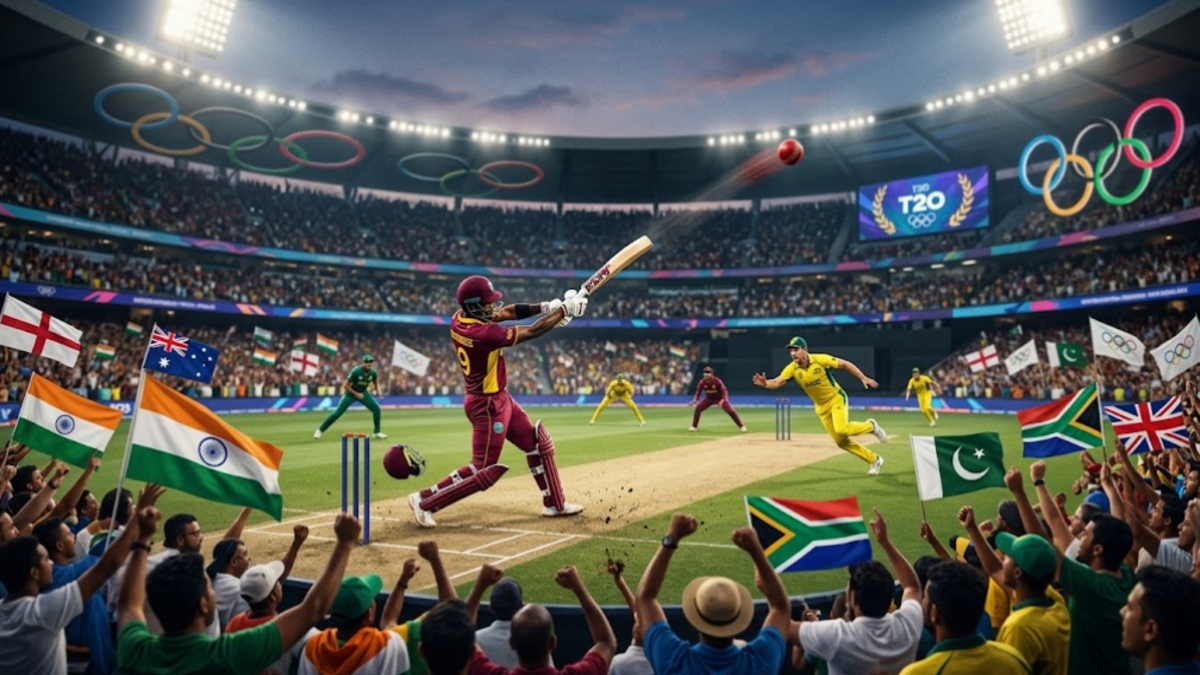
LOS ANGELES – Sport 4 ever: Cricket’s Olympic comeback is shaping up as one of the most significant global sports stories surrounding the next Summer Games, bringing one of the world’s biggest sporting communities back onto the Olympic stage after more than a century. But why is cricket’s return about much more than medals and matches?

Cricket is preparing for a remarkable return to the Olympic Games, with the sport set to feature in Los Angeles in a move that could reshape the relationship between cricket’s traditional powerhouses and the world’s biggest multi-sport event.
The comeback has been a long time in the making. Cricket last appeared at the Olympics in Paris in 1900, when the sport was contested in a very different era and under circumstances that bear little resemblance to today’s global professional game.
Its return will come through Twenty20 cricket, the shortest major international format and one designed to fit more naturally into the Olympic schedule. The format offers fast matches, high-intensity action and a relatively compact competition, making it easier for new audiences to follow than the longer forms of the sport.
The International Olympic Committee and the International Cricket Council have positioned the return as an opportunity to introduce cricket to a broader international audience. For the Olympic movement, however, the significance goes beyond adding another competition to the programme.

Recent Reuters reporting has highlighted the enormous commercial and demographic potential behind cricket’s inclusion. The sport has a particularly powerful following in India, where cricket is deeply embedded in popular culture and commands an audience that could bring millions of additional viewers into the Olympic ecosystem.
That makes the cricket comeback an important strategic development for the Games themselves.
For decades, the Olympics have sought to attract younger audiences and strengthen their presence in markets where traditional Olympic sports do not always have the same reach. Cricket offers an unusual opportunity because its strongest fan bases are concentrated in countries with huge populations and rapidly expanding digital audiences.
The result is a rare convergence of sporting ambition and global media strategy.
India is expected to be one of the central figures in the Olympic cricket story.
The country is widely regarded as cricket’s commercial heartland, with the sport commanding an enormous following across television, streaming platforms and social media. The Indian Premier League has also helped transform cricket into one of the world’s most valuable sports entertainment properties.
That influence gives the Olympic return a dimension that extends far beyond the field.
Reuters reported this week that the IOC sees cricket as a potential gateway to a vast Indian audience, at a time when Olympic organisers are looking for ways to broaden their global reach. The prospect of attracting more viewers from the Indian market could have major implications for media rights, sponsorship and the long-term commercial appeal of the Games.
The Olympic movement has increasingly focused on connecting with younger audiences through sports that already have strong digital communities. Cricket, particularly in its T20 form, fits that strategy.
The sport’s biggest stars have enormous followings, while major domestic competitions have demonstrated the ability to generate sustained attention across multiple platforms.
The challenge, however, will be turning that enormous existing interest in cricket into interest in the Olympics themselves.
That is where the Los Angeles Games could become an important test.
Cricket fans in India, Pakistan, Bangladesh, Sri Lanka, Australia, England, South Africa and the Caribbean already follow international competition closely. The Olympic setting could introduce those supporters to a different sporting environment, while also giving the Games a stronger foothold in countries where cricket is already a cultural force.
The potential audience is therefore not limited to cricket’s traditional nations.
The return also creates an opportunity to expand the sport’s reach in the United States, where cricket has historically remained outside the mainstream sporting conversation despite a growing community of players and supporters.
That may be one of the most important long-term consequences of the Olympic comeback.
The decision to use T20 cricket is central to the sport’s Olympic future.
Traditional Test cricket can last up to five days, while one-day internationals generally require an entire day to complete. Neither format fits easily into the tightly organised schedule of a modern Olympic Games.
T20 cricket is different.
Matches are designed to be completed in roughly three hours, creating a compact sporting product that can be scheduled alongside dozens of other Olympic competitions.
The format also offers a clear narrative for new viewers. Each team has a limited number of deliveries to score runs, meaning matches move rapidly from one phase to another.
For Olympic organisers, that structure makes cricket easier to programme.
For broadcasters, it creates predictable time windows and a competition that can attract both committed supporters and casual viewers.
The format has already become a major force in international cricket. Domestic T20 leagues have expanded across several continents, while international T20 tournaments have helped the game reach audiences that may never have followed longer formats.
That evolution has been critical to cricket’s Olympic ambitions.
The sport needed a version that could work within the logistical demands of a global multi-sport event. T20 provides that bridge.
At the same time, the Olympic environment could give the format a new level of visibility.
The competition will bring together elite international players under the Olympic banner, creating the possibility of new rivalries and new audiences. It also offers cricket an opportunity to tell its story to viewers who may know little about the sport but are familiar with the Olympics.
That combination could prove particularly valuable in the United States.
The choice of Los Angeles as the host city is especially significant.
The United States is not traditionally regarded as a cricket superpower, but the country’s sports market is among the most influential in the world. The arrival of cricket at the Games therefore represents a chance to build visibility in a country where the sport has substantial room for growth.
The ICC has already invested heavily in developing cricket’s presence in the American market.
Major international matches and professional competitions have begun to create a stronger profile for the sport, while the arrival of an Olympic tournament could provide another major platform.
The cricket competition is scheduled to be held at a temporary venue at the Fairgrounds in Pomona, Southern California, following the announcement that the site would host the Olympic tournament. The venue decision was welcomed by the ICC as an important step toward cricket’s return to the Games.
The location also offers practical advantages.
Keeping the competition in the Los Angeles area allows players to remain connected to the wider Olympic infrastructure and gives organisers the chance to integrate cricket into the overall Games experience.
For American audiences, the tournament could provide a first major opportunity to see the sport presented as part of the Olympic programme.
That exposure could have consequences long after the closing ceremony.
The United States has a large and diverse population, including communities with strong cricket traditions. The challenge for cricket administrators is to convert that existing interest into a wider sporting culture.
An Olympic presence can help.
The Games have a unique ability to introduce sports to people who may not otherwise seek them out. A viewer watching an Olympic broadcast may discover cricket for the first time, learn the basic rules and then become interested in domestic or international competitions.
That is precisely the kind of audience growth that cricket’s governing bodies are hoping to achieve.
The financial implications of cricket’s return are also attracting attention.
According to Reuters, the addition of cricket is already generating strong interest in Olympic media rights, particularly because of the sport’s enormous following in India. The value of future broadcasting arrangements could therefore become an important measure of how successful the Olympic cricket strategy proves to be.
Cricket’s commercial power has grown dramatically over the past two decades.
The rise of franchise competitions, the expansion of T20 cricket and the development of sophisticated broadcast products have turned the sport into a global entertainment business.
The Olympic Games offer a different commercial proposition.
Unlike domestic leagues, the Olympics bring sports together under one global brand. Athletes compete not only for their teams but also for their countries, while medal ceremonies create a level of national visibility that few other sporting events can match.
For cricket boards and players, that could provide a powerful new platform.
For sponsors, Olympic cricket creates access to a global audience that stretches across several continents.
For broadcasters, it provides a new premium sports property.
And for the IOC, it offers the possibility of strengthening the Games’ position in one of the world’s most important sports markets.
The commercial opportunity is therefore shared.
Yet the sport will also face pressure to deliver.
Olympic cricket must attract strong viewing figures, generate competitive matches and demonstrate that its inclusion has genuine long-term value.
If the tournament succeeds, it could strengthen the case for cricket to remain part of future Olympic programmes.
If it struggles to capture attention outside its traditional markets, the sport’s Olympic ambitions could face tougher questions.
That makes the comeback more than a celebration of cricket’s history.
It is also a major test of the sport’s future.
Cricket’s global footprint has historically been uneven.
While the sport has enormous popularity in South Asia, parts of the Commonwealth and several other regions, it has struggled to achieve the same mainstream recognition in Europe, North America and much of East Asia.
The Olympics could help address that imbalance.
The event will place cricket alongside sports that already enjoy broad global recognition. Its presence on the Olympic schedule may encourage national sports organisations to invest in development programmes and inspire young athletes in countries where cricket has traditionally received less attention.
The inclusion of both men’s and women’s competitions is particularly important.
Women’s cricket has grown significantly in recent years, supported by professional leagues, increased broadcast coverage and greater investment from national governing bodies.
An Olympic platform could accelerate that development.
The Games have historically played a major role in raising the profile of women’s sport. Olympic exposure can create new commercial opportunities, increase participation and give athletes a larger international audience.
Cricket therefore has the opportunity to use its return not simply as a showcase for established stars but as a vehicle for wider development.
The women’s tournament could become one of the strongest arguments for keeping cricket within the Olympic movement.
It also reflects the broader transformation of cricket itself.
The sport is no longer defined solely by five-day Test matches and traditional bilateral series. T20 cricket has created a new generation of players, fans and commercial opportunities.
The Olympic version of the game will be part of that modern identity.
The road to the Olympic tournament will also create considerable interest.
Only a limited number of teams will be able to compete, making qualification far more difficult than entry into many major international cricket tournaments.
Recent reporting on the qualification picture has indicated that the women’s field is beginning to take shape, with the leading teams from the relevant global competition securing pathways toward qualification, while the men’s field is expected to be heavily influenced by rankings and the agreed qualification system.
The restricted field means that every qualification place will carry enormous value.
Traditional cricket powers will expect to be present, but the Olympic format also creates an opportunity for emerging nations to challenge the established order.
That could make the tournament especially unpredictable.
In a T20 competition, a single exceptional performance can change the outcome of a match. A powerful batting display, a brilliant bowling spell or an outstanding fielding performance can quickly turn a game around.
That volatility suits the Olympic environment.
The Games thrive on moments of surprise, breakthrough performances and athletes who become global names in a matter of days.
Cricket has the potential to produce exactly those stories.
The historical gap between cricket’s Olympic appearances is extraordinary.
The sport’s previous Olympic appearance came in Paris in 1900. More than a century later, it is returning in a completely transformed form.
The cricket played at the beginning of the 20th century belonged to another sporting world. Today’s game is faster, more commercial, more international and far more visible through television and digital media.
The return therefore represents both continuity and reinvention.
Cricket is coming back to the Olympics, but it is not returning as the same sport.
T20 cricket is the product of a modern sporting economy that values shorter competitions, intense entertainment and global accessibility.
That makes the Olympic comeback symbolic of cricket’s broader evolution.
The sport has spent years building a stronger international structure, expanding women’s cricket and developing formats that can reach audiences beyond its traditional base.
The Olympic stage now offers the chance to put all of those developments together.
The question is whether cricket can make the most of the opportunity.
The most immediate goal is clear: deliver a successful tournament in Los Angeles.
But the wider ambition is much larger.
Cricket’s governing bodies will want the Olympic return to become the beginning of a sustained relationship with the Games rather than a one-off appearance.
Recent discussions surrounding future Olympic editions have already raised the possibility of cricket continuing its presence beyond Los Angeles, particularly as organisers consider how to balance established Olympic sports with events that can attract new audiences.
The prospect of cricket appearing again at future Games would depend on several factors, including the sport’s performance in Los Angeles and decisions made by Olympic organisers.
For cricket, the opportunity is significant.
A successful Olympic tournament could strengthen the sport’s international credentials, increase investment in emerging markets and provide greater visibility for women’s cricket.
It could also help establish a stronger cricket culture in the United States.
The IOC, meanwhile, could gain access to an audience that has historically been difficult to reach through traditional Olympic sports.
That mutual interest explains why the comeback has generated so much attention.
Cricket needs the Olympics to expand its global footprint.
The Olympics need cricket to broaden theirs.
The most interesting aspect of cricket’s Olympic return may ultimately be what happens beyond the stadium.
The sport already has hundreds of millions of passionate supporters, particularly across South Asia and other major cricket-playing regions. The Olympic opportunity is to connect those fans with the broader Games while introducing cricket to audiences who have never watched it before.
That is a rare proposition.
Most sports entering the Olympics are trying to build an audience.
Cricket is different.
It arrives with an enormous global fan base and brings the possibility of directing that audience toward the Olympic movement.
At the same time, the Olympics can provide cricket with exposure in markets where the sport remains relatively unfamiliar.
The exchange could benefit both sides.
For players, an Olympic medal would carry a unique significance.
For cricket fans, the return offers the chance to see national teams compete for one of the most recognisable prizes in world sport.
For the IOC, cricket provides access to a huge and increasingly young digital audience.
And for the sport itself, Los Angeles represents an opportunity to prove that cricket belongs in the global sporting conversation far beyond its traditional strongholds.
The Olympic comeback is therefore not simply a story about cricket returning after 128 years.
It is a story about where the sport goes next.
If the tournament captures the imagination of fans in India, the United States and around the world, cricket could emerge from Los Angeles with a stronger international identity than ever before.
The sport’s Olympic journey is only beginning, and its biggest impact may come long after the medals have been awarded.
Cricket last appeared at the Olympic Games in Paris in 1900. Its return to the Olympic programme in Los Angeles will mark only the second Olympic appearance for the sport.
The Olympic competitions will use the Twenty20, or T20, format. The shorter format is designed to provide fast-paced matches that fit more easily into the Olympic schedule.
India is one of cricket’s largest and most commercially influential markets. The sport’s Olympic return could help the Olympic movement reach a vast Indian audience while giving cricket a new global platform.
Its long-term Olympic future will depend on several factors, including the success of the competition in Los Angeles and decisions by Olympic organisers. A successful tournament could strengthen the case for cricket’s continued inclusion.