Physical Address
304 North Cardinal St.
Dorchester Center, MA 02124
 Skip to content
Physical Address
304 North Cardinal St.
Dorchester Center, MA 02124

Your favorite sports world
Your favorite sports world
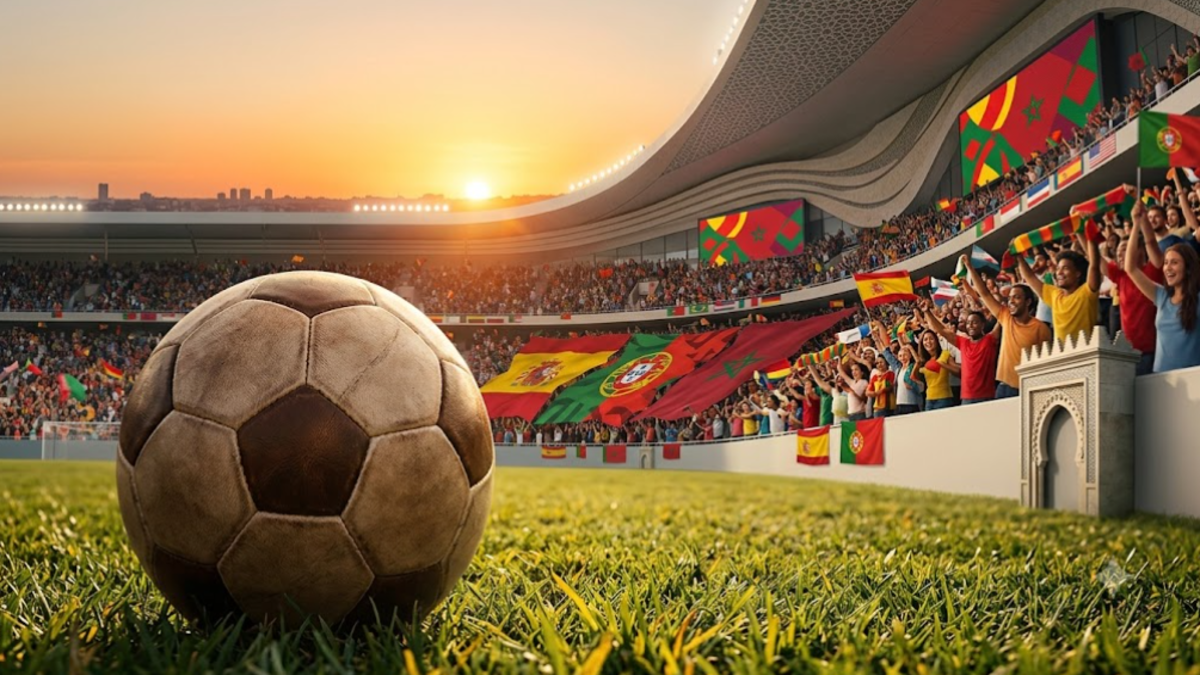
Madrid – Sport 4 Ever: The FIFA World Cup 2030 is officially set to be hosted by Spain, Portugal and Morocco, with Argentina, Paraguay and Uruguay also taking part in the tournament’s centenary celebrations. But how will the historic competition be spread across three continents?

The hosting plan was confirmed by FIFA’s Extraordinary Congress, which appointed Morocco, Portugal and Spain as the hosts of the main tournament. The decision also confirmed three centenary celebration matches in South America, with one game each in Argentina, Paraguay and Uruguay.
The 2030 tournament will bring together six countries across three continents as part of a format designed to mark the 100th anniversary of the FIFA World Cup.
Spain, Portugal and Morocco will host the main competition, while Argentina, Paraguay and Uruguay will stage the three centenary matches. FIFA said the arrangement follows a bidding process that began in October and concluded with the Extraordinary Congress appointment.
The decision means the 2030 World Cup will have a unique geographical footprint. Most of the tournament will take place in Europe and Africa, while South America will host the special matches connected to the centenary celebration.

The three South American matches will be played in the countries that are closely linked to the history of the competition. Uruguay hosted the first World Cup, while Argentina and Paraguay will also participate in the centenary program. FIFA has confirmed that one centenary celebration match will be held in each of the three countries.
The 2030 edition will commemorate a century since the first FIFA World Cup was held in Uruguay.
FIFA’s plan is designed to connect the tournament’s origins with its future. The organization has described the event as a celebration involving three continents and six countries, linking Europe, Africa and South America through the competition’s centenary program.
The tournament will also follow the expanded format introduced for the World Cup from the 2026 edition, with 48 teams competing. FIFA’s official information states that the six host nations connected to the 2030 event will qualify automatically from their respective confederation allocations.
The unusual schedule will require careful planning because of the additional travel between continents. FIFA has said the matches in South America will take place a few days before the official opening matches in Morocco, Portugal and Spain. The organization also indicated that teams involved in the centenary matches will receive additional time for travel, rest and preparation before continuing their World Cup campaign.
The main tournament will be staged across Morocco, Portugal and Spain, while three matches will take place in South America as part of the centenary celebration.
According to FIFA, the schedule will be adapted to account for the additional travel. The six teams involved in the South American matches are expected to receive approximately 11 to 12 days for travel and rest before their second game, while the other six teams in those groups will have approximately five to six days.
FIFA has also said that the majority of the 101 matches will be played in the three main host countries, which are geographically close to one another and have established transport links and infrastructure.
For Spain, Portugal and Morocco, hosting the tournament represents the culmination of a joint bid that became the sole candidacy for the 2030 edition before the final appointment.
FIFA’s Extraordinary Congress brought together all 211 member associations virtually for the decision. The hosts were appointed by acclamation after a bidding process that FIFA said began in October and included evaluation of the candidate bid before the final decision.
The tournament will therefore have a structure unlike previous World Cups. The principal host nations are located in Europe and Africa, while the centenary matches will return the competition to South America, where the first World Cup was played.
The arrangement also means that Argentina, Paraguay and Uruguay will have a direct role in the centenary edition, despite Spain, Portugal and Morocco remaining the principal host countries for the tournament itself. FIFA has confirmed automatic qualification for all six nations connected to the hosting and centenary arrangements.
The focus now turns to preparations for a tournament that will require coordination between six countries and three continents.
For supporters, the event will offer a World Cup with an unusual travel map, beginning with the centenary celebration matches in South America before the main competition continues in Morocco, Portugal and Spain.
FIFA has acknowledged the additional travel demands and said the competition schedule will provide specific rest and travel periods for the teams affected by the South American fixtures. The organization has also addressed sustainability, stating that measures will be taken to mitigate the environmental impact of the tournament.
The 2030 World Cup will therefore combine the traditional concept of a host nation with a broader centenary celebration. Spain, Portugal and Morocco will stage the main event, while Argentina, Paraguay and Uruguay will host the matches that connect the tournament to its origins.
Spain, Portugal and Morocco will host the main FIFA World Cup 2030 tournament.
Argentina, Paraguay and Uruguay will each host one centenary celebration match.
FIFA has stated that Spain, Portugal, Morocco, Argentina, Paraguay and Uruguay will qualify automatically through their respective confederation allocations.
The arrangement is designed to celebrate the 100th anniversary of the World Cup, connecting the main hosts in Europe and Africa with the tournament’s origins in South America.
The FIFA World Cup 2030 will be a landmark edition, with Spain, Portugal and Morocco hosting the main tournament and Argentina, Paraguay and Uruguay staging three centenary celebration matches. The plan will connect three continents and six countries while marking a century of World Cup history.