Physical Address
304 North Cardinal St.
Dorchester Center, MA 02124
 Skip to content
Physical Address
304 North Cardinal St.
Dorchester Center, MA 02124

Your favorite sports world
Your favorite sports world
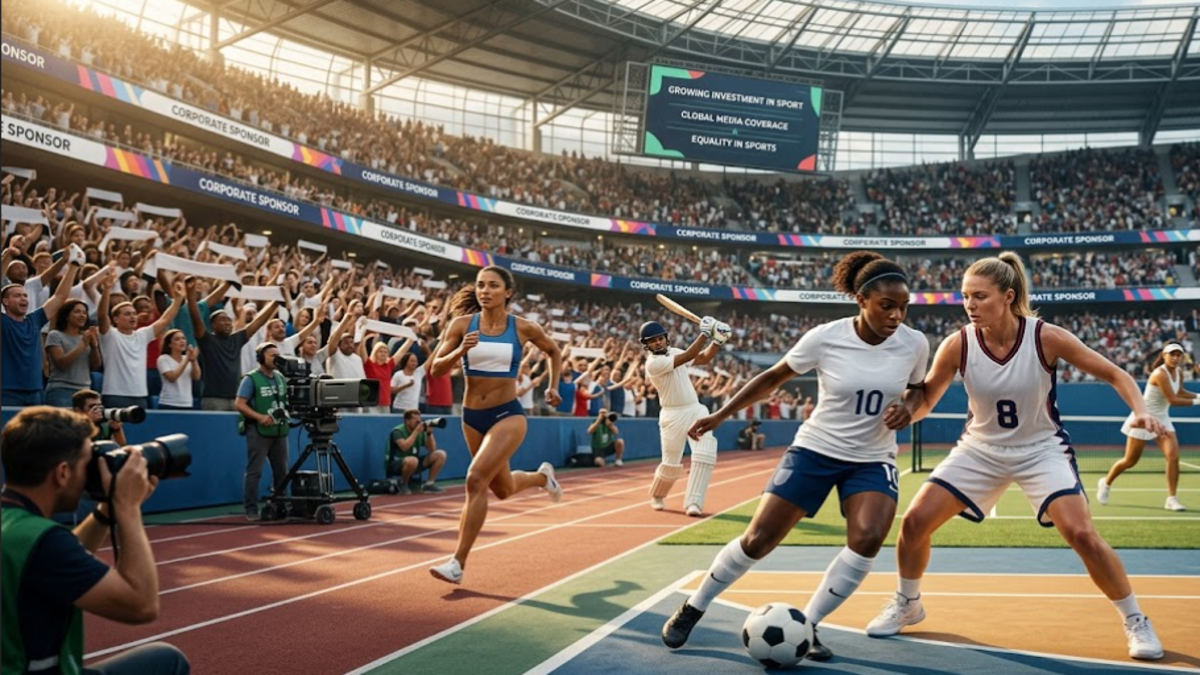
Washington – Sport 4 Ever: The rise of women’s sports is reshaping the global sports industry, with audiences growing, investment increasing and media coverage expanding, but how close is sport to achieving genuine equality?

Women’s sports are moving further into the mainstream as fans, broadcasters, sponsors and investors increasingly recognize their commercial and cultural value.
Recent figures highlighted by UN Women show the scale of the change in audience engagement. Seven out of 10 people now watch women’s sports, while almost 73% say they watch them. The figures underline a shift in the way female competitions are being consumed and followed around the world.
The commercial momentum is also becoming harder to ignore. The World Economic Forum, citing Deloitte projections, reported that global revenues in elite women’s sport are expected to surpass $2 billion, supported by commercial partnerships, matchday growth and expanded broadcasting.
The growth is not limited to one sport. Women’s football, basketball, cricket and other disciplines are attracting new audiences and creating new opportunities for media companies and sponsors.

Investment is emerging as one of the clearest signs of the changing sports economy.
Recent market analysis from S&P Global Market Intelligence described continued momentum across leading women’s sports, with revenues being supported by sponsorships, partnerships and merchandising. The analysis also noted that media rights remain below men’s sports, despite strong revenue growth.
The shift is also visible in professional leagues. In Canada, the Northern Super League secured what was described as its first private-equity investment in a professional women’s football league, another indication that financial investors are increasingly looking at women’s sport as a growth market.
The broader investment picture suggests that women’s sport is no longer being viewed only through the lens of participation or social policy. Investors are increasingly assessing leagues and teams as commercial properties with the potential to build loyal fan bases, attract sponsors and develop valuable media rights.
That does not mean the financial gap with men’s sport has disappeared. Instead, it shows that the market is expanding while significant inequalities remain.
Greater audience interest has encouraged broadcasters and media organizations to give women’s competitions more space.
The increase in coverage creates a cycle that can benefit the entire industry. More visibility can help athletes build profiles, attract sponsors and connect with fans, while stronger audiences can give broadcasters and commercial partners greater incentives to invest.
The WNBA provides a prominent example of this wider transformation. The Associated Press reported that the league is experiencing unprecedented growth, including rising viewership, increased investment, higher player salaries and expansion. At the same time, the league is facing greater scrutiny over issues involving race, gender, sexuality and player safety, demonstrating that increased visibility also brings greater public attention to unresolved challenges.
The broader media landscape, however, remains unequal. S&P Global Market Intelligence noted that media rights for women’s sports still trail those of men’s sports, even as revenues continue to rise.
This creates an important question for the next stage of growth: will increased demand lead to sustained and equal media investment, or will women’s competitions continue to receive less coverage than their audiences might justify?
The rise of women’s sports has produced clear progress, but growth should not be confused with equality.
A recent example came from Australia, where reporting highlighted a substantial difference in FIFA World Cup prize money received by the men’s and women’s national teams. The comparison showed that financial disparities remain even as women’s football attracts growing support and investment. Women Sport Australia president Chantella Perera argued for equal investment and recognition of women’s sport as a viable revenue source.
The issue extends beyond prize money.
Equality also involves access to facilities, professional opportunities, sponsorship, media exposure and decision-making positions. The continued gap between men’s and women’s sports shows that commercial growth alone does not automatically produce equal treatment.
At the same time, the expansion of women’s competitions is creating more opportunities for athletes and helping challenge older assumptions about the size of the audience for female sport.
The current moment represents a significant change in the global sports economy.
Growing audiences are demonstrating that demand exists. Rising investment suggests that businesses increasingly see commercial potential. Expanded media coverage is giving athletes and competitions greater visibility. And the continuing debate over pay and resources is keeping equality at the center of the conversation.
The next challenge is to turn momentum into lasting structures.
For women’s sports to reach their full potential, growth must translate into sustainable leagues, stronger media deals, fairer investment and greater opportunities for athletes at every level.
The rise of women’s sports is therefore more than a story about increasing popularity. It is a test of whether the sports industry can match growing public interest with a more balanced distribution of resources, visibility and opportunity.
Growing audiences, stronger athlete profiles, major competitions and wider media exposure are helping women’s sports reach more fans.
Yes. Recent market reports point to stronger commercial activity, including sponsorships, partnerships, merchandising and private investment.
No. Coverage and media rights for women’s sports have grown, but they still generally remain below the levels seen in men’s sports.
No. Progress has been significant, but differences remain in areas including prize money, investment, media exposure and professional opportunities.
The rise of women’s sports is changing the business and cultural landscape of sport. Larger audiences and increasing investment are creating new opportunities, while expanding media coverage is giving female athletes greater visibility. Yet the continuing gaps in funding, prize money and media rights show that the journey toward equality is not complete. The next phase will depend on whether the sports industry can turn growing interest into long-term, equitable investment.
….Read More
Contact us at: info@sport4ever.org